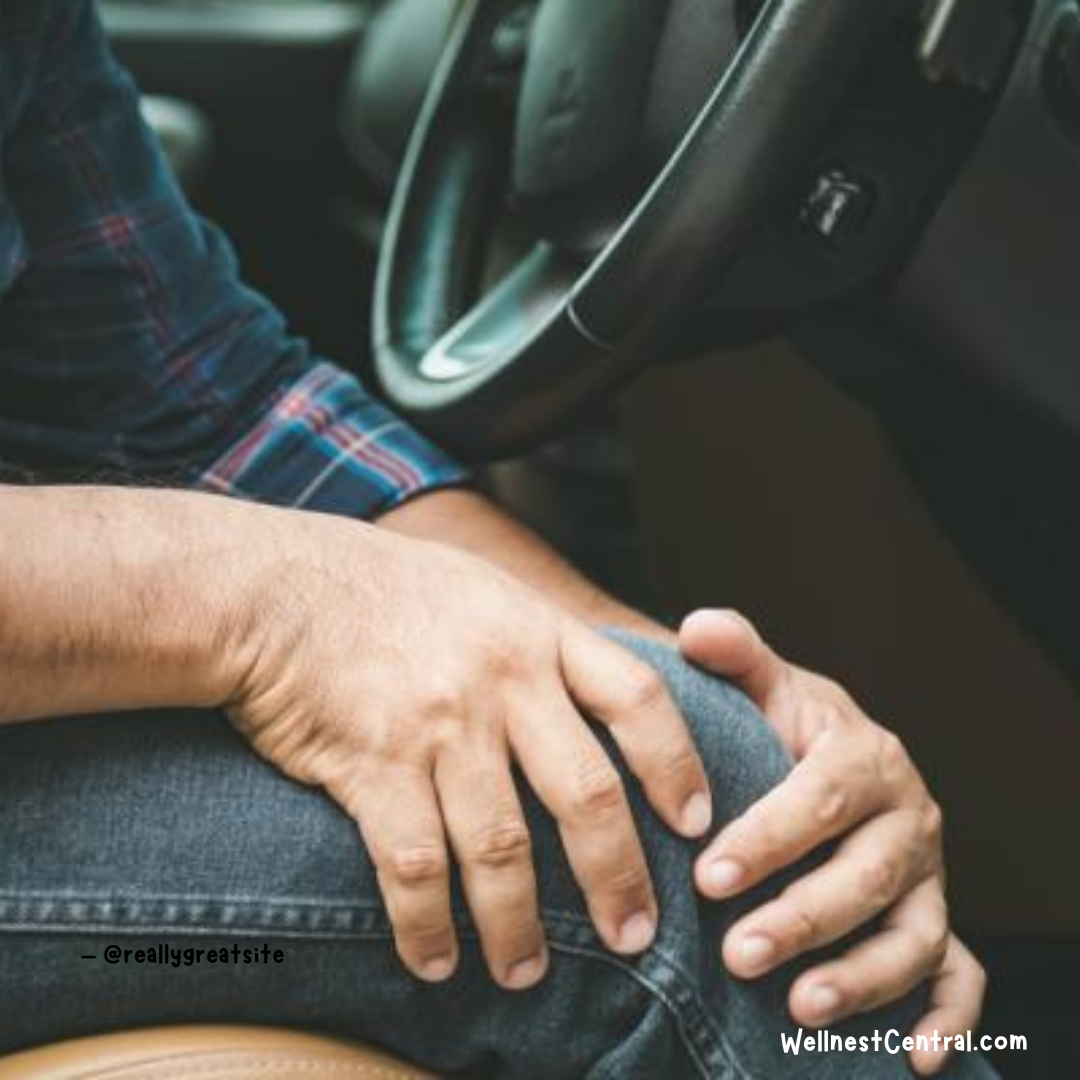
Knee pain while driving can make a short commute uncomfortable and a long journey exhausting. The position of the seat, prolonged bending of the knee and repeated pedal use can all aggravate an already sensitive joint.
Driving is not usually the sole cause of a serious knee condition, but it can reveal or worsen symptoms from osteoarthritis, tendon irritation, a previous injury or pain referred from the hip or back. The following adjustments may help you travel more comfortably without promising an instant cure.
PERSONALISED SUPPORT FOR COMFORTABLE MOVEMENT
If knee discomfort is affecting your journeys or daily routine, a one-on-one consultation can help you review practical lifestyle factors and prepare useful questions for your healthcare professional.
Why Your Knee May Hurt Behind the Wheel
Driving keeps the hip and knee flexed for an extended period. If the seat is too close, the knee remains tightly bent. If it is too far away, you may have to reach for the pedals and lose support from the seat. Repeatedly moving between the accelerator, brake and clutch can also irritate sensitive tissues.
Common contributors include:
- prolonged sitting and joint stiffness;
- a seat position that does not support the back and thighs;
- repetitive pedal use, particularly in heavy traffic;
- knee osteoarthritis, kneecap-related pain or tendon irritation;
- a previous knee injury;
- pain referred from the hip, lower back or a nerve.
If discomfort also affects your hip or changes the way you walk, read our guide to the connection between knee and hip pain.
1. Adjust the Seat Before You Drive
Move the seat until you can fully operate every pedal without locking the knee or lifting the hip away from the seat. Keep a comfortable bend in the knee when the pedal is fully pressed. Your back should remain supported, and you should not need to reach or twist.
Also check the seat height and angle. The front edge should not press firmly into the back of your thighs. If your vehicle allows it, adjust the steering wheel so you can sit back while keeping a relaxed bend in the elbows.
Any adjustment must preserve a clear view of the road and safe control of the vehicle. Never make seat changes while the car is moving.
2. Empty Bulky Items From Your Pockets
A wallet, phone or other object in a back pocket can tilt the pelvis during a long drive. That may increase discomfort in the hip, back or leg. Store bulky items securely elsewhere before setting off.
Footwear also matters for safe pedal control. Choose shoes that allow you to feel and operate the pedals reliably; avoid makeshift cushions or supports that can move under your feet.
3. Take Movement Breaks on Longer Journeys
When it is safe and practical, stop periodically on a long journey, get out of the vehicle and walk for a few minutes. There is no universal break schedule for every person, so plan more frequent stops if stiffness starts early or you have medical risk factors.
During the break, use gentle movement rather than forceful stretching. A short walk, comfortable knee bends and ankle movements may be enough. If an exercise causes sharp pain, swelling or instability, stop.
4. Build Strength and Movement Tolerance
Exercises that strengthen the thigh and hip muscles may improve knee function for some conditions. Useful programmes often include controlled sit-to-stands, step work, hip strengthening and gradual walking, but the right starting point varies.
Do not copy a demanding routine simply because it helped someone else. Pain after an injury, locking, giving way or marked swelling should be assessed before you progress exercise.
5. Manage Flare-Ups Sensibly
If the knee is irritated after driving, temporarily reduce the activity that worsens it. A wrapped cold pack for up to 20 minutes may help a recent painful or swollen knee. Some people find gentle warmth more comfortable for stiffness.
Over-the-counter pain medicines are not risk-free. Anti-inflammatory medicines may be unsuitable with kidney disease, stomach ulcers, heart problems or some other medicines. Ask a pharmacist or clinician what is appropriate for you.
What About Knee Braces and Cushions?
A brace may be helpful for a diagnosed condition, but it is not automatically the answer to driving-related discomfort. An unsuitable brace can feel restrictive and does not correct a poor seat position. If you already use one, make sure it does not interfere with safe pedal control.
A small lumbar support may help you maintain a comfortable spinal position, but avoid loose cushions that change your height unpredictably or slide while driving. Safety and reliable vehicle control come first.
When Knee Pain While Driving Needs Assessment
Arrange a medical assessment if symptoms persist for several weeks, keep returning, worsen despite adjustments or interfere with walking and normal activities.
Seek urgent medical help if:
- you cannot put weight on the leg or move the knee;
- the knee is badly swollen, deformed, hot or red;
- you have fever or feel unwell with a hot, painful joint;
- the knee locks or repeatedly gives way;
- one leg or calf becomes suddenly swollen, warm or painful, especially with breathlessness or chest pain.
Frequently Asked Questions
Can driving permanently damage my knee?
Ordinary driving does not usually damage a healthy knee. However, prolonged sitting and repetitive pedal use may aggravate an existing problem. Persistent symptoms deserve assessment rather than being blamed on posture alone.
Should my knee be completely straight when pressing a pedal?
No. You should be able to fully operate the pedal while retaining a comfortable bend in the knee and keeping your back supported. Avoid locking the knee or reaching with the toes.
Should I stretch while seated at traffic lights?
Your attention and control of the vehicle must remain the priority. Save movement breaks for a safe parking place, rest area or your destination.
Sources
This article provides general health education and does not replace individual diagnosis, treatment or road-safety advice.
MAKE DAILY MOVEMENT MORE COMFORTABLE
Book a private one-on-one consultation with Anthony Ofori for practical guidance on movement habits, weight management where relevant and joint-supportive routines.
Pingback: Can Knee Pain Cause Hip Pain? Causes, Clues and What to Do - Wellnest Central