Anthony Ofori | Medical Graduate in General Medicine | Founder, WellNest Central
Last updated: October 10, 2026
This article provides general health education for adults and does not replace individual medical advice.
Being told to “eat better for your blood pressure” can leave you with more questions than answers. Do you have to stop eating rice? Is every packaged food off limits? Do you need expensive ingredients or an entirely new way of cooking?
The DASH diet is a flexible eating pattern that uses ordinary foods. This guide to the DASH diet for beginners explains the main choices, shows how they can fit into familiar meals, and helps you choose a manageable first step. If you have kidney disease or a prescribed eating plan, discuss adaptations with your healthcare team before making major changes.
What is the DASH eating plan?
DASH stands for Dietary Approaches to Stop Hypertension. The NHLBI’s DASH eating plan emphasizes vegetables, fruit, whole grains, low-fat or fat-free dairy, beans, nuts, fish, poultry, and vegetable oils. It limits foods high in saturated fat, sweets, and sugar-sweetened drinks.
It also addresses sodium. NHLBI presents a 2,300-mg daily sodium level and notes that 1,500 mg can lower blood pressure further. Your clinician can help choose an appropriate goal. Food-group serving targets depend on calorie needs; the published 2,000-calorie example is not a prescription for everyone.
Use these principles to adapt the meals you already know. You do not need a branded food program to begin.
WellNest Central support
Turn nutrition advice into everyday meals
Explore educational support with food choices, meal planning, and sustainable lifestyle habits that fit your routine.
Start with a meal you already eat often
Choose breakfast, lunch, or dinner rather than redesigning your entire week. Write down what you normally prepare, then identify one adjustment that fits the DASH pattern.
If breakfast is usually a pastry grabbed on the way out, could you prepare oatmeal with fruit on two mornings? If dinner is rice and stew, could you review the seasoning and include a vegetable you enjoy? If lunch is always bought at work, could you compare two available options before ordering?
These are planning examples, not rules about which cultural dishes are acceptable. Keep the flavors and foods that matter to you. A useful change should be specific enough to repeat on an ordinary busy day.
Learn one sodium label skill
The FDA’s sodium guide explains that more than 70% of Americans’ dietary sodium comes from packaged and prepared foods. Putting away the saltshaker therefore addresses only part of the picture.
On the Nutrition Facts label, check the serving size and sodium amount together. As a general guide, 5% Daily Value or less is low in sodium, while 20% or more is high. Compare equivalent portions.
Imagine two soups with the same one-cup serving size. One lists 700 mg of sodium and the other 400 mg. If you eat two cups, the totals are 1,400 mg and 800 mg—a difference of 600 mg. These are illustrative figures, not values for particular products.
“Reduced sodium” means at least 25% less than the regular product; it does not necessarily mean low sodium. “No salt added” does not guarantee sodium-free. Check the number instead of relying only on the front label.
Build a few meals you would genuinely enjoy
The following ideas show how familiar ingredients can work together. They are not a complete calculated DASH menu, and portions need to suit your needs.
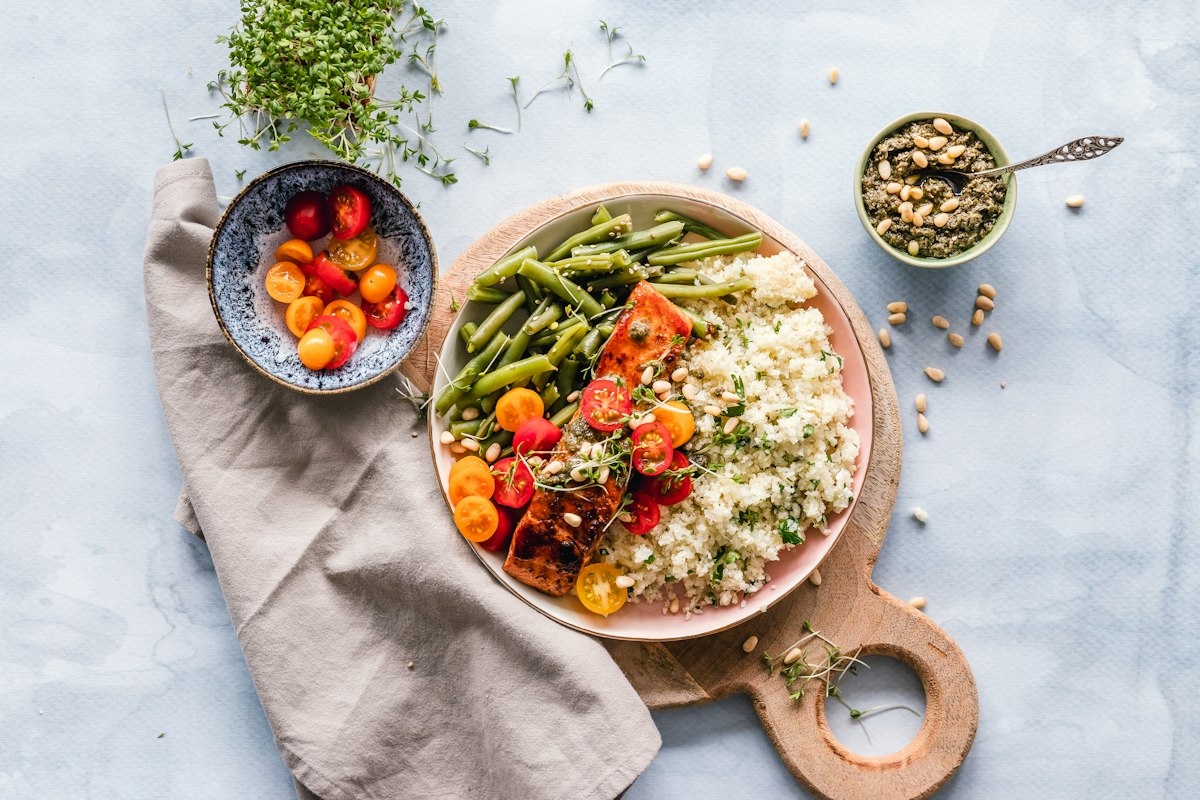
- Breakfast: oatmeal with plain low-fat yogurt and berries, with a small amount of unsalted nuts if suitable for you.
- Lunch: a whole-grain wrap with chicken or beans, vegetables, and a dressing you have compared for sodium.
- Dinner: baked fish, rice or another grain, and cooked vegetables, seasoned to taste with lemon, garlic, or herbs.
- A plant-based option: a bean-and-vegetable stew served with a familiar grain, using ingredients that fit your sodium goal.
You can repeat a meal. Having three dependable options may be more practical than finding a different recipe every day. Write down your preferred substitutions so that an unavailable ingredient does not derail dinner.
For convenient ingredients, our guide to choosing frozen vegetables explains what to look for on the package.
Make the shopping list match your budget
Before shopping, check what is already in your cupboard, refrigerator, and freezer. Choose two meals that share ingredients. For example, a vegetable bought for dinner might also go into the next day’s lunch, provided you prepare and store it safely.
Compare unit prices, but also consider waste. A larger container is not automatically better value if you cannot finish it. A familiar store-brand ingredient that you use is more useful than a premium product bought only because the packaging looks healthy.
Keep a short fallback list for hectic days: one breakfast, one lunch, and one dinner you can assemble without much thought. This is a practical safeguard against abandoning the plan whenever time is short.
What if you have kidney disease?
A general heart-healthy pattern may need adjustment. NIDDK’s guidance on eating with chronic kidney disease stresses that there is no single meal plan for everyone. Potassium, phosphorus, protein, sodium, and fluid needs can vary with kidney function and treatment.
Do not automatically increase high-potassium foods or use potassium-based salt substitutes if you have kidney disease or have been told your potassium is high. Ask your clinician or renal dietitian what is appropriate. Some lower-sodium products use potassium chloride, so the ingredient list can matter too.
This does not mean everyone with kidney disease needs to avoid fruit, vegetables, or beans. The aim is an individual plan rather than unnecessary restrictions. Our article on high potassium on a blood test offers background for that discussion.
Choose three actions for your first week
Keep the first week focused. You might choose the following:
- Compare one staple. Check the sodium in a food you buy regularly and choose an alternative you are willing to eat.
- Plan one repeatable meal. Write the ingredients on your shopping list and decide when you will prepare it.
- Review one obstacle. If lunch is difficult because you have no refrigerator at work, plan around that reality rather than copying someone else’s routine.
At the end of the week, ask what tasted good, what was affordable, and what took too much effort. Keep the useful changes. Adjust the awkward ones instead of treating them as evidence that you cannot eat well.
Keep food changes connected to your care plan
Continue prescribed blood pressure treatment and monitoring. Do not stop medication because you have started a new eating pattern. If your readings or symptoms change, discuss them with your clinician.
A useful appointment question is: “What sodium goal and food changes make sense with my medicines, kidney function, and usual meals?” Bring an example of a normal day of eating. The more concrete the conversation, the easier it is to leave with a plan you can use.
Would you like support making everyday nutrition more practical?
A private WellNest Central consultation offers educational guidance around food choices and sustainable lifestyle goals. Medical nutrition needs and medication changes should be managed with your treating healthcare team.
Book Your One-on-One Consultation



Pingback: How to Choose Whole-Grain Bread: A Simple Label Guide
Pingback: High Lipoprotein(a) With Normal Cholesterol: Next Steps
Pingback: Why Is Your Blood Pressure Higher in Winter?