Anthony Ofori | Medical Graduate in General Medicine | Founder, WellNest Central
Last updated: October 16, 2026
This article provides general health education and does not replace an individual blood pressure assessment.
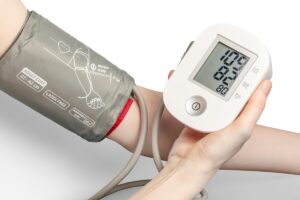
You may be used to watching the top number on your blood pressure monitor. Then you notice something else: the distance between the top and bottom numbers seems unusually large. A reading such as 150/70 has a wider gap than 120/80, even though both contain a lower number that might look reassuring on its own.
That gap is called pulse pressure. It can provide additional information about circulation, but it should be interpreted alongside both blood pressure numbers, your age, symptoms, and medical history.
The aim is not to create another number to check repeatedly. It is to understand whether a consistent pattern deserves a conversation with your healthcare professional.
How is pulse pressure calculated?
Subtract diastolic pressure, the bottom number, from systolic pressure, the top number. For a reading of 120/80 mm Hg, the pulse pressure is 40 mm Hg.
The Mayo Clinic explanation of pulse pressure describes how this difference can contribute to cardiovascular assessment. A wider gap can be relevant, particularly in older adults, but it does not identify a single diagnosis.
Pulse pressure is also different from your pulse rate. A monitor may show blood pressure and heart rate on the same screen, but heart rate is measured in beats per minute. It is not one of the numbers used in the subtraction.
Write down the full reading. A note that says only “pulse pressure 60” leaves out whether the original measurement was 130/70 or 160/100. Those readings deserve different attention even though the difference is the same.
Why might the gap become wider?
The elasticity of large arteries influences the pattern. With stiffer arteries, systolic pressure can rise while diastolic pressure does not rise by the same amount. Other circulatory conditions and measurement circumstances can also affect the result.
Recent American Heart Association research reporting on pulse pressure and aortic stiffness highlights that these relationships can change with age and differ across populations. Such research helps explain why clinicians consider the pattern, but it does not allow an individual reader to diagnose arterial stiffness from a home measurement.
A single wide gap after rushing upstairs is not the same information as a repeated resting pattern. Equally, a persistent pattern should not be dismissed simply because you feel well.
Is there one number that everyone should target?
Pulse pressure is not usually managed as a stand-alone home treatment target. Clinicians consider the full blood pressure profile and the person’s overall cardiovascular risk.
Avoid trying to force the two numbers closer together by changing medication yourself. Lowering one part of a reading without considering the rest of the clinical picture can create problems, including symptoms from low blood pressure.
Our guide to the bottom blood pressure number explains why diastolic pressure still matters. A reassuring-looking bottom number does not cancel out a high systolic reading.
At your next review, ask whether the gap changes the assessment or whether the main priority remains improving your overall blood pressure control. That gives the calculation a practical purpose.
Understand your readings with a clearer plan
Explore consultation options for educational support with recording blood pressure and preparing useful questions for your care team.
Check measurement technique before interpreting a trend
A reading can be distorted by the wrong cuff size, movement, talking, or measuring without enough rest. The subtraction does not remove those errors; it simply carries them into another number.
The American Heart Association’s home-monitoring guidance recommends a correctly fitting cuff, quiet rest, supported positioning, and two readings one minute apart. Follow the monitoring schedule agreed with your clinician.
Keep your back supported, feet on the floor, and arm supported at heart level. Use the device as instructed and bring it to an appointment if you are unsure whether it agrees with the clinic’s equipment.
If your arms give different results, our article on different blood pressure readings in each arm explains why that deserves its own assessment. Use the arm your clinician recommends for ongoing monitoring.
What should you record for a useful review?
Record the date, time, both blood pressure numbers, and any symptoms. Note whether the reading was taken after the recommended rest and whether anything unusual happened that day.
For example, a short record might show repeated morning readings with a wide gap and several episodes of lightheadedness. That is more informative than a screenshot of the single most unusual number.
Avoid measuring every few minutes while searching for a result you prefer. Ask how many days of readings your clinician wants and submit the complete record, including the ordinary measurements.
Useful questions include:
- Is this a consistent resting pattern or ordinary variation?
- Does my age, treatment, or medical history help explain it?
- Are the systolic or diastolic values themselves outside my agreed target?
- Do I need different monitoring or another assessment?
When should you seek urgent help?
Chest pain, severe breathlessness, fainting, or sudden neurological symptoms require urgent assessment regardless of the calculated pulse pressure. Call 911 for symptoms suggesting a heart attack or stroke.
If systolic pressure is higher than 180 or diastolic pressure is higher than 120 mm Hg, follow urgent blood pressure guidance. With concerning symptoms, call 911. Without symptoms, repeat after at least one minute and contact your healthcare professional immediately if the reading remains very high.
For a repeated wide gap without an emergency symptom, arrange a review and bring the full readings. The useful next step is an explanation and a plan, not a diagnosis based on subtraction alone.
Want help building consistent monitoring habits? Explore One-on-One Consultation Options for educational guidance alongside your clinician’s blood pressure care.