Is sciatica surgery dangerous? Every operation carries risk, but “dangerous” is too simple a label. The relevant question is whether the expected benefit of a specific procedure outweighs its risks for a specific person. That depends on the cause of nerve compression, the severity and duration of symptoms, neurological findings and overall health.
Most people with sciatica improve over time without surgery. Surgery is generally considered when severe leg pain or disability persists despite suitable nonsurgical care, or when progressive weakness or serious nerve compression requires faster action.
PREPARE FOR A CLEARER HEALTHCARE CONVERSATION
A one-on-one consultation can help you organise symptoms, daily limitations and lifestyle questions before speaking with your doctor or surgical team.
When Surgery May Be Considered
A specialist may discuss surgery when imaging shows a problem that matches the symptoms and one or more of the following apply:
- disabling leg pain continues despite an appropriate period of nonsurgical treatment;
- weakness is significant or getting worse;
- walking or normal daily activity remains severely limited;
- spinal stenosis causes persistent nerve compression; or
- there is an emergency condition such as cauda equina syndrome.
Back pain by itself is less predictably improved by surgery intended to decompress a nerve. The location of pain and whether the scan finding matches the affected nerve are important.
When Surgery May Be Urgent
Seek emergency assessment for numbness around the genitals or anus, inability to start urinating, loss of bladder or bowel control, sciatica on both sides, or severe and worsening weakness in both legs. These can indicate cauda equina syndrome and should not wait for a routine appointment.
Sudden foot drop or rapidly progressive one-sided weakness also needs prompt assessment. Do not delay because pain temporarily improves.
Common Operations Used for Sciatica
Discectomy or Microdiscectomy
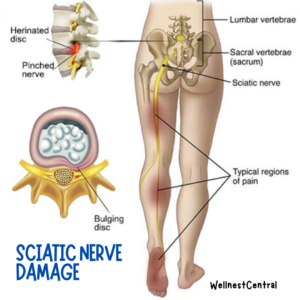
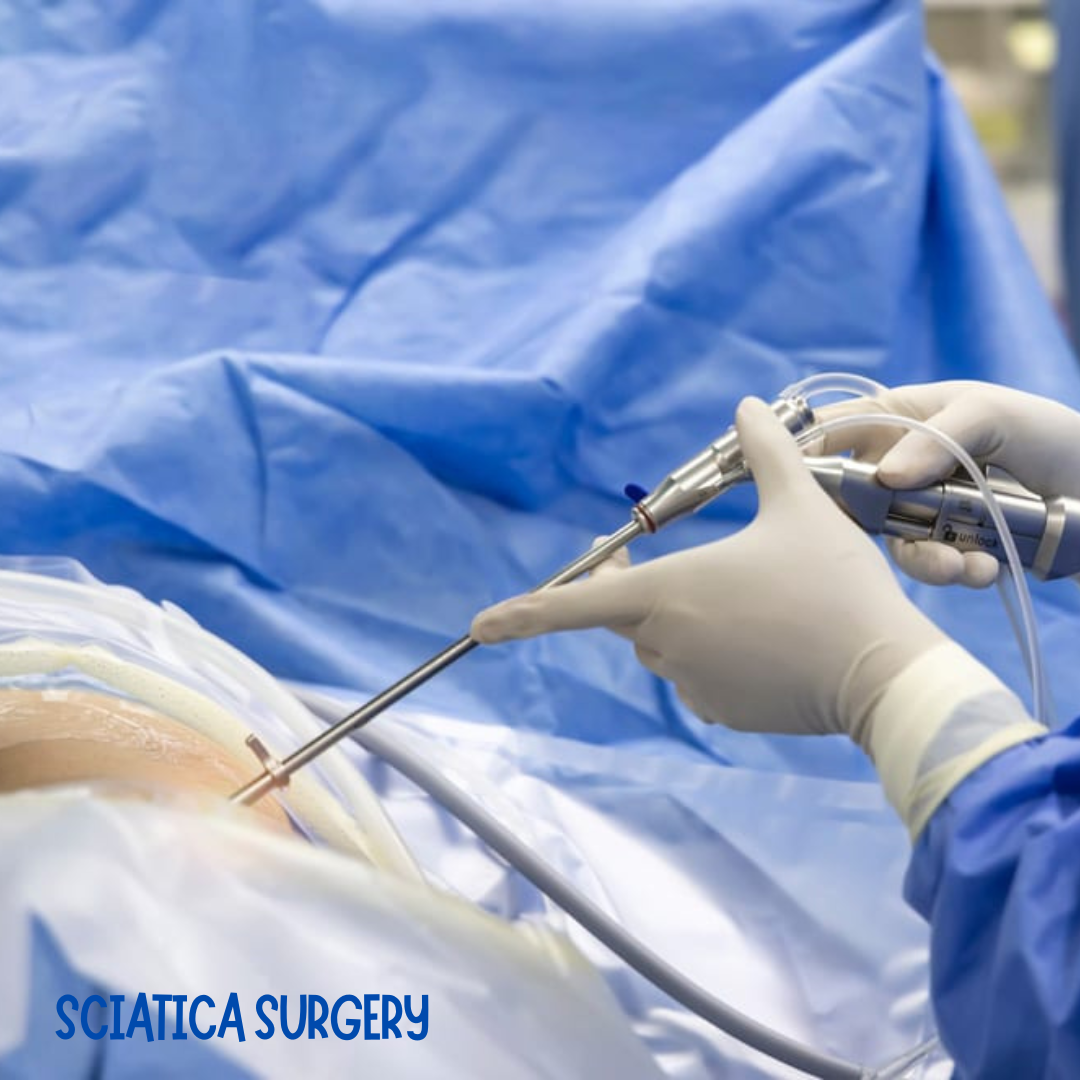
The surgeon removes the part of a herniated disc pressing on a nerve root. “Micro” describes the approach and equipment; it does not mean the operation is risk free.
Laminectomy or Decompression
Part of the bone or other tissue creating pressure around the nerves is removed. This is commonly considered for spinal stenosis and may be combined with removal of disc material.
Spinal Fusion
Fusion joins vertebrae to improve stability. It is not required for every disc problem or decompression. A surgeon may consider it when instability, deformity or another structural issue is present.
The exact procedure should address the documented cause. Ask the surgeon to show you the compression on the scan and explain how the operation is expected to change your symptoms.
Potential Benefits
The main goal is usually relief of radiating leg pain and improved function. Some people recover strength or sensation, although nerve recovery can be slow and may be incomplete when compression has been severe or prolonged.
Surgery can provide faster relief for appropriately selected patients. It does not guarantee a pain-free back, prevent every future disc problem or reverse all nerve damage.
Possible Risks and Complications
Risks vary by operation, surgical level, health and previous procedures. They may include:
- infection or wound problems;
- bleeding or blood clots;
- reaction to anaesthesia;
- a tear in the covering of the nerves with leakage of spinal fluid;
- nerve injury, new weakness or numbness;
- persistent or recurrent pain;
- another disc herniation; and
- spinal instability or need for another operation.
Serious complications are uncommon, but their impact can be substantial. Your own risk cannot be calculated from a general article.
How to Weigh Benefits Against Risks
Shared decision-making should include the severity of symptoms, expected natural recovery, nonsurgical options, work and caregiving demands, the surgeon’s recommended procedure and what matters most to you.
Useful questions include:
- What is the exact diagnosis and which nerve is compressed?
- Does the scan finding match my symptoms and examination?
- Which symptom is most likely to improve—leg pain, weakness, numbness or back pain?
- What happens if I wait?
- What are the surgeon’s complication and reoperation rates for this procedure?
- How long may driving, lifting and work be restricted?
- What rehabilitation will I need?
What Usually Comes Before Elective Surgery
Depending on the situation, nonsurgical care may include staying active, physiotherapy, suitable pain management and sometimes an injection. Prolonged bed rest is generally not helpful. Read safe next steps for sciatic nerve and hip pain.
Weight management may support mobility for some people, but it is not a condition for deserving pain care. See what the evidence suggests about weight loss and sciatica.
Preparing for Surgery and Recovery
Follow the surgical team’s instructions about medicines, fasting, smoking and activity. Tell them about prescriptions, over-the-counter medicines and supplements because some increase bleeding or interact with anaesthesia.
Plan transport, home support, wound care and work restrictions in advance. After surgery, the team may encourage early movement and provide physiotherapy or occupational-therapy guidance. Recovery time differs by procedure and job demands.
Warning Signs After Surgery
Contact the surgical team urgently for new or worsening leg weakness or numbness, new bladder or bowel problems, fever, wound redness or drainage, severe unrelieved pain, chest pain or sudden breathlessness. Follow the discharge instructions for the correct emergency contact.
Sources
This article is for general education and cannot determine whether surgery is appropriate for you. Decisions require assessment by a qualified spine specialist and surgical team.
SUPPORT YOUR HEALTH BEFORE AND AFTER TREATMENT
Get practical lifestyle guidance for nutrition, sleep, movement and stress that complements—not replaces—your medical and surgical care.
Anthony Ofori | Medical Graduate in General Medicine | Founder, WellNest Central