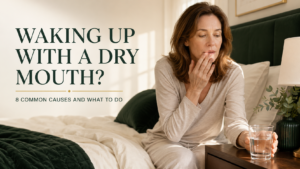
A small strip of tape across the lips. A peaceful-looking bedroom. A promise that you will wake up refreshed, stop snoring and breathe better.
Mouth taping makes a compelling social-media demonstration because it looks simple. But a simple-looking intervention is not necessarily a sensible solution to a breathing problem.
If you wake with a dry mouth, snore regularly or feel tired despite spending enough time in bed, your symptoms deserve attention. The starting point is understanding them—not covering your mouth before you know why it opens at night.
Here is what the research can tell us, what remains uncertain and how to take a more useful next step.
What Is Mouth Taping?
Mouth taping means using an adhesive product to keep the lips closed during sleep, with the intention of encouraging breathing through the nose.
Online discussions often group it with “sleepmaxxing”: attempts to improve sleep through routines, gadgets and other interventions. However, the popularity of a bedtime routine does not establish its medical value.
It is important to separate a goal from a method. Wanting comfortable breathing and better sleep is reasonable. That does not mean sealing the lips is the right way to achieve either.
Does Mouth Taping Actually Work?
A 2025 systematic review published in PLOS One examined 10 studies involving 213 patients. It found limited, low-quality evidence, with some improvements in selected measures in particular groups—not convincing support for general use.
The studies also examined different methods of keeping the mouth closed. A result involving a selected patient or an additional prescribed device does not prove that an adhesive product sold online will help an otherwise unassessed person.
The review highlighted potential serious breathing risks when nasal obstruction is present. Many included studies excluded people with nasal problems, limiting how far their findings can be applied.
The practical conclusion is that possible benefits in narrowly selected settings should not be turned into a universal recommendation.
Why Might Your Mouth Be Dry in the Morning?
A dry mouth is a symptom, not a diagnosis. It does not prove that mouth breathing is the only issue—or that tape will resolve it.
The National Institute of Dental and Craniofacial Research lists medicines and several health conditions among possible causes of dry mouth. Persistent dryness can also increase dental problems because saliva helps protect the mouth.
Notice whether the dryness happens only after sleep or throughout the day. Have you recently started a medicine? Do you also have a blocked nose, thirst, discomfort when eating or recurring mouth problems?
Those details are more useful at an appointment than simply reporting that a product did not work. Do not stop prescribed medication on your own.
For a fuller explanation, read our guide to waking up with a dry mouth and what to do.
When Snoring Deserves More Than a Sleep Hack
Snoring is not automatically sleep apnea. However, certain combinations of symptoms should prompt an appropriate medical assessment.
The NHLBI’s sleep apnea guidance identifies warning signs including:
- Breathing that repeatedly stops and starts during sleep
- Frequent loud snoring or gasping for air
- Persistent daytime sleepiness or fatigue
- Morning headaches, dry mouth or repeated nighttime waking
You may not notice breathing pauses yourself. If someone shares your bedroom, their observations can be useful. Ask what they have actually seen or heard rather than asking them to diagnose you.
A quieter night is not, on its own, proof that breathing is normal. Do not use a reduction in noise to dismiss witnessed pauses or ongoing daytime sleepiness.
If you are struggling to stay awake while driving, do not drive. Arrange prompt medical advice and use another way to travel.
What Should You Do Instead?
1. Address Breathing Symptoms Before Buying a Product
If nasal blockage is persistent, or you cannot breathe comfortably through your nose, seek advice about its cause. Do not use mouth tape to force a breathing pattern around an unresolved obstruction.
This article does not provide a taping technique or recommend a supposedly safer tape pattern. Changing the product is not a substitute for checking whether the approach is suitable.
2. Make Your Sleep Routine Less Complicated
You do not need to install an elaborate routine tonight. Choose one achievable adjustment: finish work messages earlier, move your last coffee earlier in the day or protect a more consistent waking time.
Choose the change that addresses your actual difficulty. If your problem is working until midnight, buying a new bedside gadget may leave the main issue untouched.
Our morning light exposure guide explores another way to think about your daily sleep routine.
3. Treat Persistent Dry Mouth as an Oral-Health Issue Too
Sipping water, appropriate oral care and dental review may help while the cause is investigated. The NIDCR also discusses saliva-supporting options such as sugar-free gum when appropriate.
Use gum only while awake—not in bed while falling asleep. Ask your dentist or clinician about persistent symptoms rather than simply trying to hide them overnight.
4. Follow Through With a Sleep Assessment When Needed
According to the NHLBI’s diagnostic guidance, assessment involves your symptoms and history, and a sleep study may help establish the type and severity of sleep apnea.
A simple diary can support that conversation. Record approximate sleep and wake times, nighttime waking and daytime sleepiness. Add any breathing observations from a partner.
You do not need perfect data. A brief, honest record is preferable to postponing an appointment until you have purchased a tracker or gathered weeks of measurements.
What If You Already Use CPAP?
If you have prescribed sleep apnea treatment and experience mouth leaks or dryness, contact your treatment team. Do not add mouth tape or change treatment settings without their guidance.
The NHLBI describes positive airway pressure, prescribed oral devices and other clinically selected approaches to sleep apnea treatment. Which option fits depends on the condition and the person.
An online product should not replace your prescribed treatment. Explain exactly what is making it difficult to use so the team can help troubleshoot it.
Where Do Sleep Supplements Fit?
Supplements belong in a separate conversation from mouth taping. A product marketed for sleep does not identify the cause of snoring, clear an obstructed airway or replace sleep apnea treatment.
Magnesium Bisglycinate: Modest Evidence, Clear Limits
A 2025 randomised, placebo-controlled trial involving 155 adults with poor sleep found a small improvement in self-reported insomnia symptoms after four weeks of magnesium bisglycinate. That is encouraging but does not establish a cure, and the result does not prove that every retail product has the same effect.
If inadequate intake is a concern, discuss whether supplementation makes sense. For someone whose main problem is witnessed breathing pauses, gasping or marked daytime sleepiness, arranging a sleep assessment takes priority over trying a supplement.
Check the elemental magnesium per daily serving, not just the weight of the compound. Avoid stacking several magnesium products. Magnesium can cause diarrhoea or abdominal discomfort and can interact with medicines, including some antibiotics and osteoporosis treatments. If you have kidney disease, seek professional advice before taking it. The NIH Office of Dietary Supplements explains these precautions; a pharmacist can help check suitability and medicine timing.
Affiliate disclosure: If you buy through this link, WellNest Central may receive a commission at no additional cost to you. Affiliate relationships do not determine whether a supplement is suitable for you.
Optional product to compare: Body Attack Magnesium Bisglycinate Complex. This is the Germany/EU partner option already listed in the WellNest supplement guide. Check the current label and delivery availability for your country. It is not a proven treatment for belly fat, cortisol excess or sleep apnea, and this specific product was not established as the product used in the cited trial.
Introducing one suitable product, if needed, is more informative than starting an entire “sleep stack.” Keep prescribed treatment unchanged unless your treatment team advises otherwise.
A Useful Plan for the Next Seven Days
Instead of testing a new sleep hack, try this simple approach:
- Identify your main concern. Is it dryness, snoring, difficulty falling asleep or feeling unrefreshed?
- Write down the pattern. Note when it occurs and any associated symptoms.
- Choose one routine change. Keep it manageable rather than adding several interventions at once.
- Arrange an assessment when symptoms warrant it. Do not wait a week if breathing pauses or severe sleepiness are already concerning.
At the end of the week, ask whether your chosen change was realistic and whether the original concern remains. Improving a routine and seeking medical care are compatible; you do not have to choose between them.
The Bottom Line
Mouth taping is a popular idea with limited evidence—not a universal solution for snoring, dry mouth or poor sleep.
The better question is: Why am I having these symptoms, and what is the appropriate next step?
Start with manageable habits, take breathing symptoms seriously and seek the right assessment when needed. Sleep should not become another performance contest or a nightly shopping list.
Ready for a routine shaped around your working hours, stress and personal goals? Book Your One-on-One Consultation with WellNest Central for personalised health education and practical lifestyle support. This does not replace diagnosis or treatment of a sleep disorder.
Selected References
Supplement references: Schuster and colleagues (2025): magnesium bisglycinate randomised trial; NIH ODS: Magnesium.
- Rhee and colleagues, PLOS One (2025): systematic review of mouth taping
- NIDCR: Dry Mouth
- NHLBI: Sleep Apnea Symptoms
- NHLBI: Sleep Apnea Diagnosis
- NHLBI: Sleep Apnea Treatment
- NHLBI: Healthy Sleep Habits
Anthony Ofori | Medical Graduate in General Medicine | Founder, WellNest Central
This article provides general health education and does not replace medical diagnosis or individual treatment.