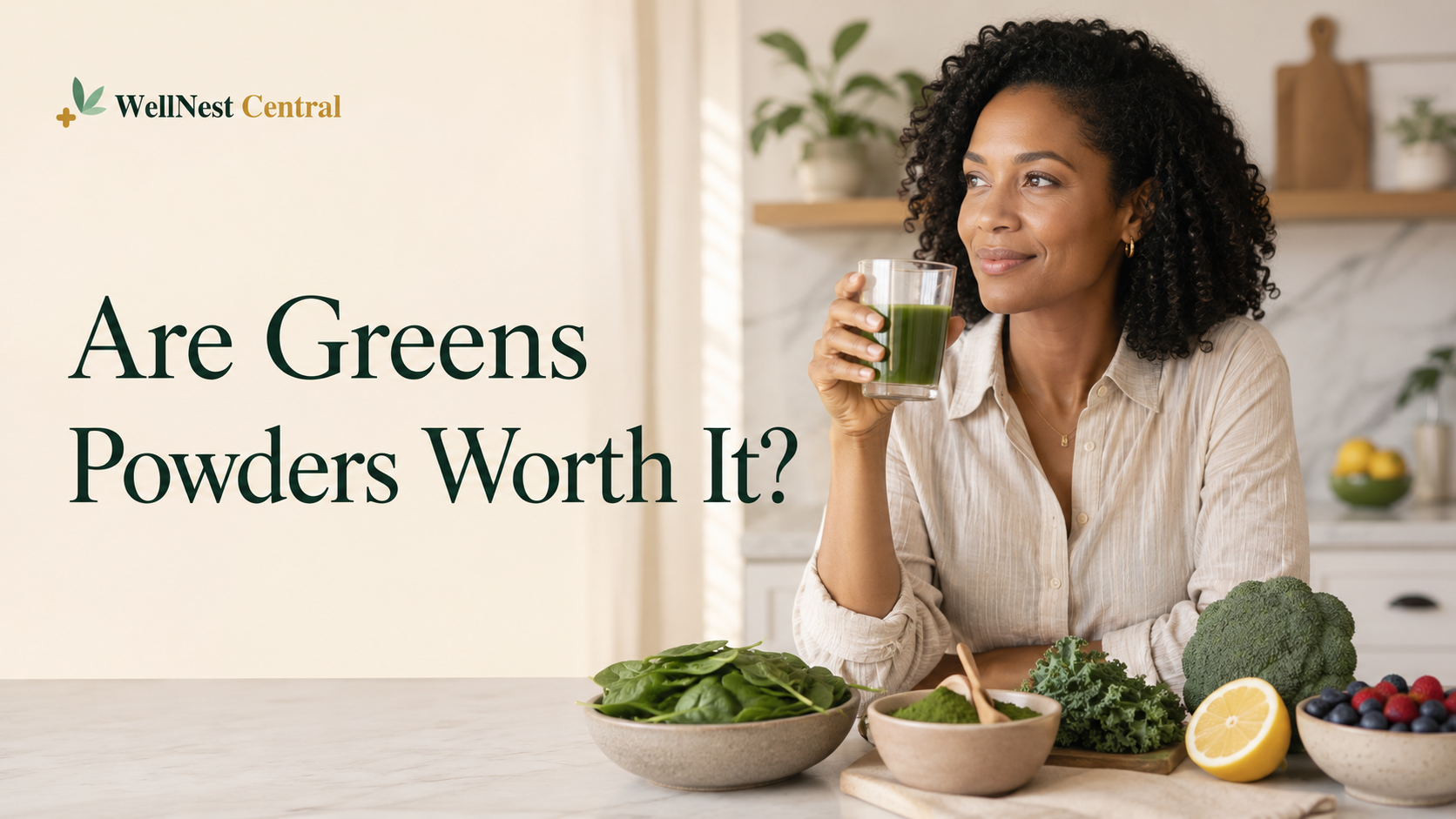
Greens powders seem to be everywhere. One scoop is often promoted as a simple way to increase energy, improve digestion, strengthen immunity, support gut health and compensate for a diet that does not contain enough vegetables.
These products usually combine powdered grasses, vegetables, fruits, algae, herbs, vitamins, minerals, probiotics or digestive enzymes. Some provide useful nutrients, but the formulas differ considerably.
So, are greens powders worth it?
For some people, a carefully selected greens powder can be a convenient nutritional addition. However, it should support a healthy diet rather than replace vegetables, fruit, balanced meals or appropriate medical care.
Would you like personalised support with nutrition, supplements or metabolic health?
Book Your One-on-One Consultation with WellNest Central for practical guidance based on your diet, health concerns, medication and personal goals.
What Are Greens Powders?
Greens powders are dietary supplements made from dried and powdered plant ingredients.
Depending on the product, one serving may contain ingredients such as:
- Spinach, kale or broccoli powder
- Wheatgrass or barley grass
- Spirulina or chlorella
- Beetroot, carrot or berry powder
- Green tea or herbal extracts
- Added vitamins and minerals
- Probiotics or prebiotic fibres
- Digestive enzymes
- Adaptogenic herbs
- Natural or artificial sweeteners
The name “greens powder” does not describe one standard formula. Two products may look similar while containing completely different ingredients and nutrient amounts.
This is why the label matters more than the colour of the powder or the promises printed on the front of the container.
What Benefits Can Greens Powders Offer?
A Convenient Nutritional Top-Up
The strongest practical advantage of a greens powder is convenience.
If you are travelling, working long hours or temporarily struggling to prepare balanced meals, a scoop mixed with water may provide small amounts of certain vitamins, minerals and plant compounds.
This can make a greens powder a useful backup on an imperfect day. It does not make it nutritionally identical to eating vegetables.
Additional Vitamins and Minerals
Some products contain meaningful amounts of vitamins A, C, K, folate or other micronutrients. However, many of these nutrients are added separately rather than coming entirely from the powdered vegetables.
Check the nutrition panel to see exactly what one serving provides.
A long list of impressive ingredients does not always mean that every ingredient is present in a useful amount. When dozens of ingredients are combined into a small scoop, some may be included only in tiny quantities.
Plant Compounds and Antioxidants
Vegetables, fruits, herbs and algae contain various plant compounds with antioxidant activity. Concentrated fruit-and-vegetable supplements may increase the intake of some of these compounds.
However, changes in an antioxidant measurement do not automatically mean that a product prevents disease or produces a noticeable improvement in health.
Possible Digestive Support
Some greens powders contain probiotics, prebiotic fibres or digestive enzymes. These ingredients may be helpful for certain people, but their effectiveness depends on the specific strain, amount, formulation and individual digestive needs.
One small four-week randomised controlled trial of a popular greens supplement found changes in several gut bacteria and no significant negative changes in standard safety markers. However, the study included only 30 healthy adults, lasted four weeks and involved researchers employed by the manufacturer.
The findings are interesting, but they do not prove that every greens powder improves gut health or provides long-term benefits.
What Greens Powders Cannot Replace
Whole Vegetables and Fruit
The World Health Organization recommends that people older than ten aim for at least 400 grams of fruit and vegetables and at least 25 grams of naturally occurring dietary fibre each day.
Whole vegetables and fruit provide:
- Fibre
- Water
- Natural food structure
- Greater volume and satisfaction
- A wider range of nutrients and plant compounds
- The chewing and digestive processes associated with eating food
A scoop of powder generally provides less fibre and much less food volume than a plate of vegetables.
The powder may contribute something useful, but it should not be counted as a complete replacement for all your daily vegetables.
A Balanced Meal
Most greens powders contain very little protein, energy or healthy fat. Drinking one for breakfast does not necessarily provide the nutrition needed to remain satisfied and maintain muscle.
A more balanced breakfast might include eggs, Greek yoghurt, oats, beans, wholegrain bread, fruit, nuts or another combination suited to your culture and preferences.
Treatment for a Nutritional Deficiency
A greens powder is not a reliable treatment for iron deficiency, vitamin B12 deficiency, vitamin D deficiency or another confirmed nutritional problem.
Deficiencies may require blood tests, identification of the cause and a specific dose of the missing nutrient. A general powder may provide too little of the required nutrient or contain ingredients you do not need.
A Detoxification Treatment
Your liver, kidneys, digestive system, lungs and skin already perform essential processes that help the body manage and eliminate waste.
A greens powder may contribute nutrients, but claims that it “flushes toxins,” cleanses the liver or completely resets the body should be treated cautiously unless the company provides reliable evidence for the exact product and claim.
Guaranteed Energy, Weight Loss or Immunity
Greens powders are sometimes promoted as solutions for fatigue, weight gain, poor concentration or frequent illness.
Persistent fatigue can have many causes, including poor sleep, stress, anaemia, thyroid problems, medication effects, depression, infection or inadequate food intake. A powder should not delay an appropriate health assessment.
Greens powders also do not directly cause meaningful fat loss. Any benefit would depend on how the product fits into your complete diet and lifestyle.
Who Might Find a Greens Powder Useful?
A greens powder may be useful for someone who:
- Travels frequently and has limited food options
- Works shifts or has an unpredictable schedule
- Is gradually improving a previously low-quality diet
- Wants a convenient supplement for occasional busy days
- Has difficulty accessing varied produce for short periods
- Understands that the powder complements rather than replaces food
The most helpful mindset is to view it as nutritional insurance for certain days—not permission to ignore your everyday diet.
Personalised nutrition support
Not Sure Whether a Greens Powder Fits Your Diet?
A supplement may be convenient, but your usual food intake, medication, budget and health needs all matter. WellNest Central can help you look at the wider picture before you buy.
How to Choose a Quality Greens Powder
1. Look for a Transparent Ingredient Label
Choose a product that clearly lists its ingredients and serving amounts.
Be cautious with large proprietary blends that combine many ingredients under one total weight. Without individual amounts, it can be difficult to know whether an ingredient is present in a meaningful quantity.
2. Check the Vitamin and Mineral Amounts
More is not always better.
A product that provides extremely high amounts of several vitamins may be unnecessary, especially if you already take a multivitamin or other supplements.
Check your total intake from all products to avoid unintentionally taking the same nutrients several times.
3. Check the Sugar, Sweeteners and Flavourings
Some products are unsweetened, while others contain added sugar, fruit concentrates or sweeteners.
If you are managing glucose levels, examine the carbohydrate and sugar content rather than assuming that every green drink is automatically suitable.
For more practical guidance, read Blood Sugar Spikes After Meals: 7 Practical Ways to Reduce Them.
4. Pay Attention to Caffeine and Herbal Extracts
Green tea extract, guarana, adaptogens and other stimulating ingredients may be included in a greens powder.
These ingredients can make the product feel energising, but they may also affect sleep, anxiety, blood pressure or medication.
A product intended for general nutrition does not necessarily need a large collection of stimulating herbs.
5. Look for Quality Testing
Choose an established manufacturer that follows appropriate manufacturing standards and provides meaningful information about quality and contaminant testing.
The NIH Office of Dietary Supplements explains that independent organisations such as NSF International, U.S. Pharmacopeia and ConsumerLab offer quality-testing programmes.
A quality seal can provide reassurance that the product contains the listed ingredients and does not contain harmful levels of tested contaminants. It does not prove that the supplement is effective for every advertised purpose.
6. Consider the Cost Per Serving
A premium greens powder may cost considerably more than frozen vegetables, beans, oats, fruit or other nutritious foods.
Before purchasing, calculate the cost per serving and ask:
- What nutritional gap am I trying to address?
- Does this product provide a meaningful amount?
- Could food address the same need more effectively?
- Will I use the product consistently?
- Am I paying mainly for marketing and convenience?
The most expensive powder is not automatically the best one.
A Relevant Partner Option
Life Extension currently carries several fruit, vegetable and greens-powder formulations. Readers who want to compare the ingredients, nutrient amounts and serving costs can explore the available greens products through Life Extension.
Look for a transparent label, moderate nutrient amounts, limited added sugar and a formula that matches your actual needs.
Affiliate disclosure: WellNest Central may earn a commission if you purchase through this link, at no additional cost to you. This does not change the price you pay or our commitment to balanced, evidence-aware guidance.
You can also review The WellNest Supplement Guide for practical principles for choosing supplements responsibly.
Are Greens Powders Regulated?
Supplements are regulated, but they are not regulated in exactly the same way as prescription medicines.
In the European Union, food supplements are regulated as foods. EFSA explains that manufacturers, importers, suppliers and distributors are responsible for ensuring that products placed on the market are safe. European rules also control permitted vitamins, minerals, labelling and health claims.
In the United States, the Food and Drug Administration regulates dietary supplements under a different framework from medicines. The FDA does not approve supplements for safety and effectiveness before most products reach the market.
This makes responsible manufacturing, accurate labelling, quality testing and realistic health claims especially important.
Who Should Be More Cautious?
Speak with an appropriately qualified healthcare professional before using a complex greens powder if you:
- Take warfarin or another medicine affected by vitamin K
- Use several medicines or supplements
- Have kidney or liver disease
- Are pregnant or breastfeeding
- Have a diagnosed nutritional deficiency
- Have food allergies or sensitivities
- Are preparing for surgery
- Are considering giving the product to a child
- Experience persistent or unexplained symptoms
Some products contain vitamin K, potassium, iodine, caffeine, green tea extract, probiotics or herbs that may not be appropriate for everyone.
Starting with a smaller serving may reduce digestive discomfort from ingredients such as inulin, probiotics or concentrated plant powders. Stop using the product and seek appropriate advice if you experience a concerning reaction.
How to Use a Greens Powder Practically
If you decide to use one, keep the routine simple:
- Follow the recommended serving rather than adding several scoops.
- Mix it with water or add it to a balanced smoothie.
- Avoid combining multiple products with overlapping vitamins and herbs.
- Continue eating vegetables, fruit, beans, whole grains, nuts and seeds.
- Notice how your digestion, sleep and energy respond.
- Review the product if it is expensive but makes no meaningful difference.
- Tell your healthcare professional about supplements you use.
A greens powder should make a healthy routine more convenient. It should not make your routine more complicated.
The Bottom Line
Are greens powders worth it? Sometimes—but their value depends on the product, your diet, your needs and your expectations.
A well-formulated greens powder may provide a convenient nutritional top-up on busy days. It may add certain vitamins, minerals, plant compounds or digestive ingredients to your routine.
It cannot reproduce everything found in whole vegetables, provide the structure of a balanced meal, correct every deficiency, detoxify the body or guarantee better energy, digestion, immunity or weight loss.
Choose food first whenever practical. Use a greens powder as an optional supplement rather than the foundation of your nutrition.
Ready for a nutrition and supplement plan that fits your real life?
Book Your One-on-One Consultation with WellNest Central for personalised holistic health education and practical support with nutrition, supplements, energy, weight management and metabolic health.
This article provides general health education and does not replace medical diagnosis or individual treatment. Consult an appropriately licensed healthcare professional before using supplements to manage a health condition or alongside prescribed medication.