“I don’t have time to exercise.”
For many adults, this is not an excuse. It is reality.
Between work, commuting, family responsibilities, appointments and everyday stress, finding a full hour for the gym can feel almost impossible.
And that often leads to an all-or-nothing mindset:
“If I cannot complete a proper workout, there is no point doing anything.”
But your body does not only benefit from movement when you are wearing gym clothes or completing a 60-minute workout.
Small amounts of purposeful movement throughout your day can also contribute to a more active lifestyle.
This is where exercise snacks can become particularly useful.
They provide a realistic way for busy people to stop waiting for the “perfect time” to exercise and start using the small opportunities that already exist within their day.
PERSONALISED MOVEMENT SUPPORT
Need a movement plan that fits a busy day?
A one-on-one consultation can help you build short, realistic movement habits around your work, energy, mobility and wider health goals.
What Are Exercise Snacks?
The idea is surprisingly simple.
Instead of depending entirely on one long workout, you perform brief periods of purposeful physical activity at different points during your day.
They might last only a few minutes.
For example:
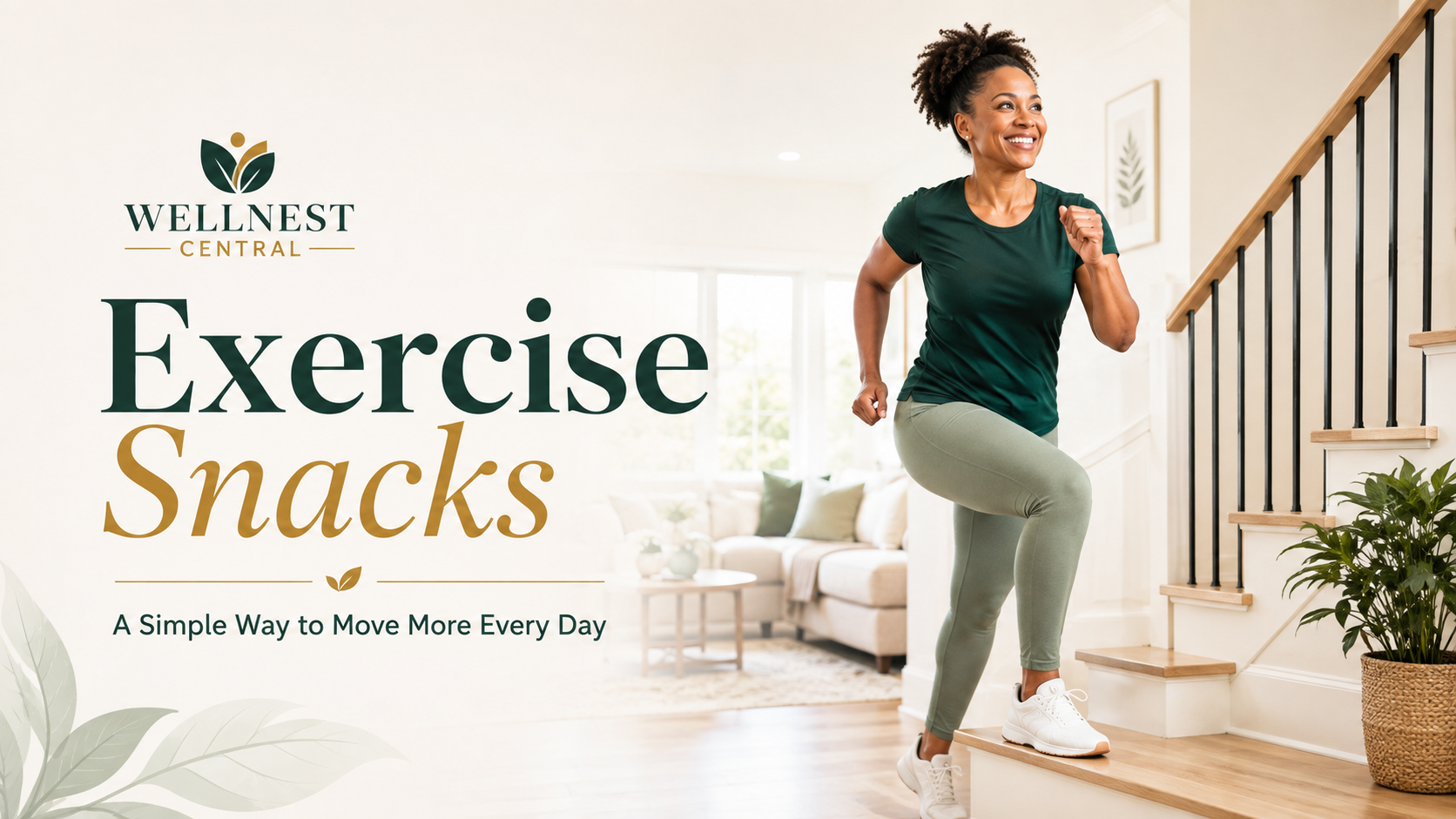
- Walking briskly up several flights of stairs
- Taking a five-minute fast walk
- Doing 10–15 chair squats
- Performing wall push-ups during a work break
- Dancing energetically to one song
- Standing and walking after sitting for a prolonged period
- Completing a short body-weight routine at home
Individually, these activities may appear small.
But small actions repeated consistently can help you spend less of your day completely inactive.
Why Sitting All Day Matters
Modern life makes prolonged sitting remarkably easy.
You may sit while travelling to work.
Then sit at your desk.
Sit during lunch.
Sit on the journey home.
And finally sit in front of the television or your phone in the evening.
Even people who consider themselves busy can spend many hours physically inactive.
Regular movement is important for overall health, cardiovascular fitness, muscle function, mobility and metabolic health.
This does not mean that standing for a few minutes magically eliminates the effects of an inactive lifestyle.
It means that building more opportunities for movement into your normal routine can be one useful part of becoming more physically active.
You Do Not Need to Wait for a Free Hour
One of the biggest barriers to exercise is believing that it requires a large block of uninterrupted time.
Imagine two people.
The first person plans to exercise for one hour every evening.
But work frequently finishes late, family responsibilities appear and exhaustion takes over.
By the end of the week, that person may have exercised only once.
The second person still aims for proper workouts but also uses small opportunities throughout the day:
Five minutes of walking in the morning.
A few squats during lunch.
Stairs instead of the lift.
A short walk after dinner.
Which routine feels easier to continue during a busy week?
This is the practical value of exercise snacks: they lower the barrier to getting started.
You are no longer waiting for the perfect schedule.
You are learning to recognise opportunities to move.
6 Simple Ways to Add More Movement to Your Day
1. Take the Stairs
If it is appropriate for your fitness level, choose the stairs occasionally instead of the lift or escalator.
You do not have to race.
Walk at a pace that challenges you comfortably.
2. Try Chair Squats
Stand in front of a stable chair.
Lower yourself toward the chair in a controlled way and return to standing.
Even a small set can introduce some lower-body movement into a sedentary day.
If you have balance difficulties, significant joint pain or another health concern, obtain appropriate guidance before trying new exercises.
3. Take a Five-Minute Walking Break
Instead of spending every break looking at your phone, walk.
Walk through the building.
Walk outside.
Walk around your home.
Five minutes may not sound impressive, but repeated movement is more useful than repeatedly postponing exercise because you cannot find an hour.
4. Use the Wall
Wall push-ups can provide a simple way to include upper-body activity without needing gym equipment.
They can be particularly convenient during a home-office day.
5. Put on One Song
Choose a song you enjoy and move.
Dance, march or simply move around the room.
Movement does not always have to feel like a formal exercise programme.
6. Create a “Movement Trigger”
Connect movement to something you already do every day.
For example:
After morning coffee → walk for five minutes.
After lunch → take the stairs.
After a meeting → stand and stretch.
After arriving home → complete a short movement routine.
Attaching a new behaviour to an existing habit can make it easier to remember.
Consistency Is More Valuable Than Perfection
A common mistake in health and weight management is attempting to transform everything overnight.
You suddenly decide that from Monday you will:
Exercise every day.
Never eat unhealthy food.
Drink perfect amounts of water.
Sleep eight hours.
Walk 10,000 steps.
Cook every meal.
Avoid sugar completely.
Then real life happens.
Within a week, the plan collapses.
A more sustainable approach is often to begin with something manageable.
Ask yourself:
What amount of movement could I realistically repeat even on a busy day?
Perhaps the answer is five minutes.
Start there.
Once that behaviour becomes easier, you can gradually build on it.
Can Short Movement Sessions Help With Weight Management?
Physical activity can be an important part of a healthy weight-management strategy, but weight management is influenced by much more than exercise alone.
Your eating patterns, sleep, stress, medicines, medical conditions, environment and daily habits can all play a role.
A five-minute walk should therefore not be viewed as a magical weight-loss technique.
Instead, think of movement as one piece of a broader lifestyle strategy.
For someone who currently spends most of the day sitting, increasing everyday movement may be an important first step toward becoming more active.
Do Short Sessions Replace Regular Exercise?
No.
Short bouts of movement are helpful, but they should not become an excuse to avoid building a broader fitness routine.
Adults should generally work toward regular aerobic activity together with muscle-strengthening exercise appropriate for their health and ability.
The good news is that you do not have to reach that goal immediately.
If you are currently inactive, beginning with smaller amounts of movement may make the transition feel much more achievable.
Exercise snacks can be the beginning of the journey—not necessarily the entire journey.
A Better Question to Ask Yourself
Instead of asking:
“Do I have enough time to exercise today?”
Try asking:
“Where can I add five minutes of movement today?”
That small change in thinking can make physical activity feel much more accessible.
Perhaps you walk while making a phone call.
Take the stairs.
Get off public transport one stop earlier when practical.
Move during a television break.
Walk after lunch.
Your health habits do not have to look impressive on social media.
They need to work in your real life.
When Should You Get Medical Advice Before Exercising?
Most people benefit from becoming more active, but exercise should be appropriate for your health circumstances.
Speak with an appropriately licensed healthcare professional before beginning a demanding exercise programme if you have concerns such as:
- Known heart disease
- Significant breathing problems
- Uncontrolled high blood pressure
- Severe joint or mobility problems
- Frequent dizziness or fainting
- Chest discomfort
- A major chronic medical condition
- Symptoms that have not yet been medically evaluated
Stop exercising and seek appropriate medical attention if you develop concerning symptoms such as chest pain, severe breathlessness, fainting or sudden weakness.
Health advice online should never replace proper medical assessment when symptoms require it.
Final Thought
You do not always need more motivation.
Sometimes you need a smaller starting point.
Five minutes of movement may not look dramatic.
Neither does taking the stairs.
Neither does performing a few squats beside your desk.
But healthier lifestyles are rarely built from one extraordinary day.
They are built from ordinary actions repeated long enough to become part of who you are.
Start small. Move more often. Stay consistent.
Frequently Asked Questions
Does a five-minute workout actually count?
Yes, short periods of movement still contribute to your overall physical activity. However, they are best viewed as part of a broader active lifestyle rather than a complete replacement for regular aerobic and strength exercise.
Can short workouts help me lose weight?
Physical activity can support weight management, but weight loss also depends on factors such as nutrition, total energy intake, sleep, stress, medications and individual health circumstances.
How many short movement breaks should I do each day?
There is no single number that is right for everyone. If you currently sit for long periods, begin by introducing a few manageable movement breaks and gradually increase your overall activity.
What is the easiest activity for beginners?
Walking is often one of the simplest options. Chair-based movements, stairs and gentle body-weight exercises may also be appropriate depending on your fitness and health status.
Sources & References
Anthony Ofori | Medical Graduate in General Medicine | Founder, WellNest Central
Medical Disclaimer
This article provides general health education and is not a substitute for diagnosis, treatment or personalised advice from a qualified healthcare professional. Seek medical advice before increasing activity if you have concerning symptoms or a condition that may affect exercise safety.
READY TO MOVE MORE CONSISTENTLY?
Build a routine that works in real life
Book a private consultation for practical, personalised guidance on movement, nutrition, energy, stress and sustainable daily habits.


Pingback: Waist-to-Height Ratio: The Health Check Your Scale Misses
Pingback: Morning Light Exposure: Better Sleep and Energy
Pingback: Resting Heart Rate After 40: What Is Normal?
Pingback: Protein After 40: How Much Do You Really Need?
Pingback: Magnesium Glycinate for Sleep: Benefits, Dosage & Safety
Pingback: 10-Minute Walk After Meals for Better Blood Sugar
Pingback: Can Weekend Exercise Improve Your Health?