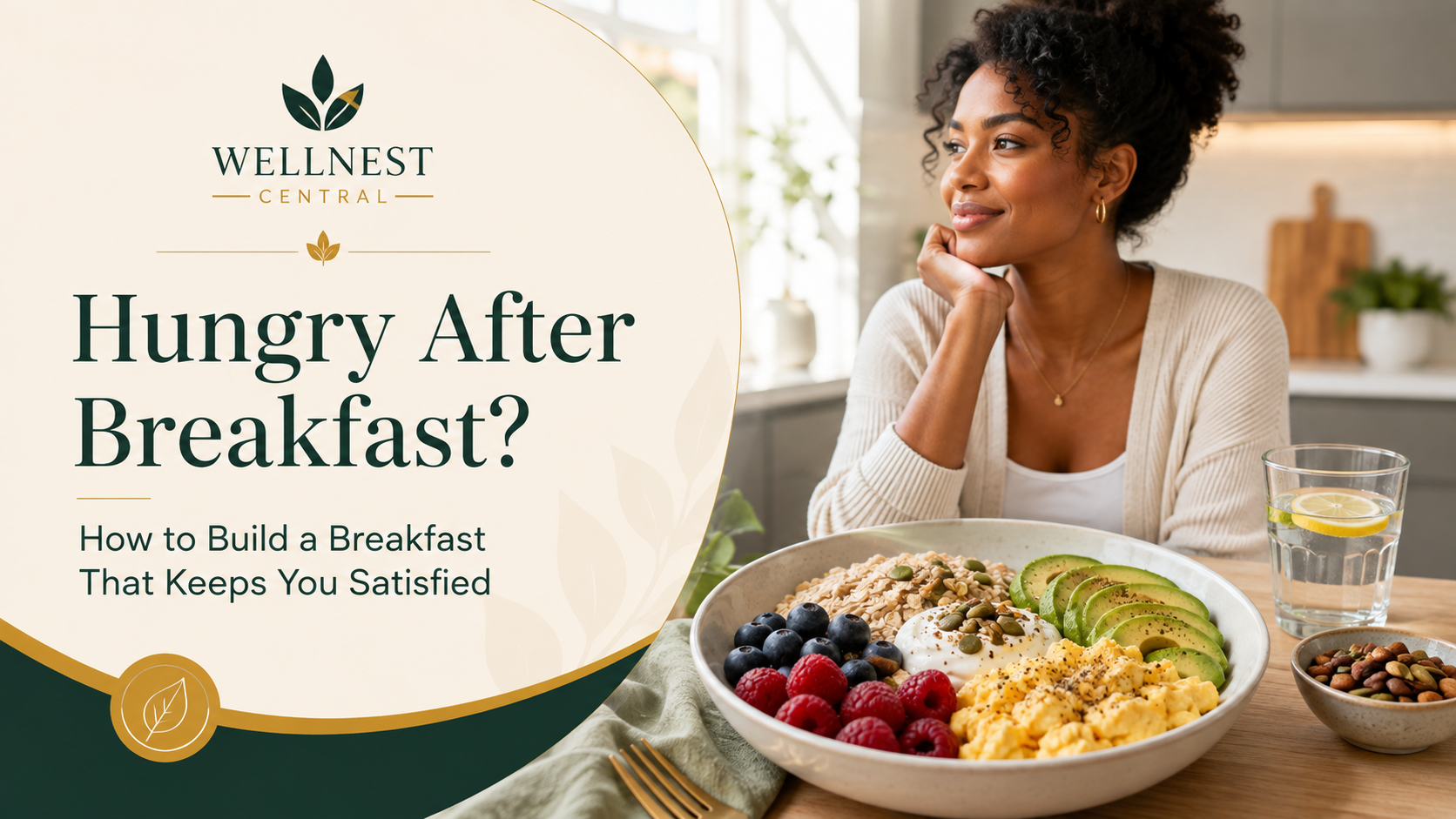
You eat breakfast at 7:30 in the morning.
By 10:00, you are searching for something to eat again.
Perhaps you reach for biscuits, pastries, another coffee or whatever is available at work.
If this happens regularly, you may assume that you simply have a big appetite or lack self-control.
But the problem may be much simpler:
Your breakfast may not be satisfying enough.
The composition of your morning meal can influence how full you feel afterwards. Research suggests that protein-rich breakfasts can increase satiety in some people, while fibre-rich foods can also help support fullness. However, appetite is complex, and no single breakfast formula works identically for everyone.
PERSONALISED NUTRITION SUPPORT
Want breakfast to keep you satisfied for longer?
Get practical guidance for building balanced breakfasts that fit your appetite, culture, routine and health goals—without unnecessary food rules.
Why Your Breakfast May Not Keep You Full
Imagine these two breakfasts.
Breakfast A:
Sweetened cereal
Fruit juice
Coffee with sugar
Now compare it with:
Breakfast B:
Eggs
Vegetables
Whole-grain toast
A piece of fruit
Water
Both are breakfasts.
But nutritionally, they are very different.
A morning meal dominated by refined carbohydrates or added sugars may contain less protein and fibre than a more balanced meal. Choosing whole grains and fibre-rich carbohydrate sources alongside protein is generally a better foundation for healthy eating.
This does not mean carbohydrates are bad.
Your body needs carbohydrates.
The question is what type of carbohydrates you are choosing, how much you are eating and what you are eating with them.
Is Blood Sugar the Reason You Get Hungry Again?
You may have heard that every carbohydrate-heavy breakfast causes a dramatic blood-sugar “spike and crash,” which automatically causes hunger.
The reality is more nuanced.
The macronutrient composition of breakfast can influence the glucose response after eating, but research does not show that every change in post-meal glucose automatically translates into greater hunger. One controlled study, for example, found differences in glycaemic response between breakfasts without corresponding differences in measured appetite.
So rather than becoming afraid of carbohydrates, focus on building a better-balanced meal.
That is usually much more practical.
4 Things to Consider When Building a More Satisfying Breakfast
1. Include a Good Source of Protein
Protein is an excellent place to start.
Research comparing different breakfast compositions has found that higher-protein breakfasts can improve feelings of satiety in some groups.
Breakfast protein could come from:
- Eggs
- Greek or natural yogurt
- Cottage cheese
- Beans
- Lentils
- Tofu
- Fish
- Unsweetened dairy products
- Nuts and seeds as part of the meal
You do not need to eat the same food every morning.
The principle is simply to make protein a meaningful part of the meal rather than an afterthought.
2. Do Not Forget Fibre
Fibre can help make meals more satisfying, although the effect varies according to the type of fibre and food. Research on cereal fibres, particularly some oat and rye sources, has found beneficial effects on measures of appetite and satiety.
Useful breakfast sources include:
- Oats
- Berries
- Apples or pears
- Vegetables
- Beans
- Whole-grain bread
- Chia or flax seeds
- Nuts
- Other whole grains
The CDC also recommends choosing fibre-rich whole grains and incorporating fruits, vegetables and other whole foods into healthy eating patterns.
3. Include Healthy Fats
Healthy fats can form part of a balanced breakfast.
Examples include:
- Avocado
- Nuts
- Seeds
- Nut butter
- Olive oil
You do not need large quantities.
The aim is to create a balanced meal rather than turning breakfast into a complicated nutrition formula.
4. Remember Your Fluids
Sometimes people begin the morning with several cups of coffee but very little water.
Keep hydration simple.
Have water available during the morning and make it your main everyday drink.
You do not need expensive detox drinks, special powders or complicated morning cleanses.
Plain water works perfectly well.
Three Simple Balanced Breakfast Ideas
You do not need “diet food” to eat well.
Try combinations such as:
Option 1
Eggs + vegetables + whole-grain toast
Add avocado or fruit if desired.
Option 2
Greek yogurt + berries + oats + nuts or seeds
Choose yogurt with little or no added sugar when possible.
Option 3
Oats + yogurt or milk + berries + chia seeds + nuts
The important principle is the combination:
Protein + fibre-rich food + sensible carbohydrate + healthy fat.
What About African and Caribbean Breakfast Foods?
Healthy eating does not require abandoning your culture.
You can build a balanced breakfast around familiar foods.
For example:
Eggs with vegetables and a sensible portion of yam.
Beans with plantain and vegetables.
Oats with fruit, nuts and seeds.
Whole-grain bread with eggs and avocado.
A traditional meal does not automatically become unhealthy because it contains carbohydrates.
Consider the whole meal, portion and preparation method instead of labelling individual cultural foods as “good” or “bad.”
A Better Question to Ask Yourself
Many people ask:
“Did I eat breakfast?”
A more useful question may be:
“Did my breakfast actually keep me satisfied?”
Pay attention to what happens afterwards.
Are you comfortably satisfied until your next planned meal?
Are you desperately looking for snacks an hour later?
Do you feel energetic?
Are you choosing food because you are physically hungry, or because you are tired, stressed or simply surrounded by food?
These observations can teach you far more about your eating pattern than following a rigid diet copied from social media.
If You Are Always Hungry After Breakfast, Look Beyond the Food
Breakfast is only one part of the picture.
Persistent hunger may also be influenced by:
- Poor sleep
- Stress
- Very restrictive dieting
- Overall calorie intake
- High levels of physical activity
- Medication
- Your normal eating schedule
- Individual appetite differences
- Certain health conditions
That is why changing one breakfast ingredient will not solve every person’s problem.
Your overall lifestyle matters.
What About Weight Loss?
A satisfying breakfast can support a healthier eating routine, but breakfast itself is not a weight-loss treatment.
You do not lose weight simply because you eat eggs instead of cereal.
Weight management involves the broader pattern of:
- Nutrition
- Portion sizes
- Physical activity
- Sleep
- Stress
- Environment
- Medicines
- Medical conditions
- Long-term habits
The goal should therefore not be:
“What breakfast burns fat?”
A better question is:
“What type of breakfast helps me eat well consistently?”
That is a much more sustainable way to think about nutrition.
Try This Tomorrow Morning
Before completely changing your diet, experiment with one simple adjustment.
Take your usual breakfast and ask:
Where is the protein?
Where is the fibre?
Is most of this meal refined carbohydrate or added sugar?
Could I add fruit or vegetables?
Am I drinking enough water?
Then make one improvement.
Not ten.
One.
For example:
Sugary cereal → oats + yogurt + berries.
Toast alone → whole-grain toast + eggs + vegetables.
Coffee and pastry → yogurt + fruit + nuts, with your coffee.
Small changes are often easier to maintain than dramatic diet overhauls.
Frequently Asked Questions
Why do I get hungry shortly after eating breakfast?
Your breakfast may simply not provide enough food or may contain relatively little protein and fibre. Sleep, stress, activity level, dieting habits and individual appetite can also influence hunger.
Is cereal bad for breakfast?
Not necessarily.
Look at the type of cereal, fibre content, added sugar, portion and what you eat with it. A whole-grain cereal combined with yogurt, fruit, nuts or seeds is very different from a highly sweetened cereal eaten alone.
Are eggs good for keeping you full?
Eggs provide high-quality protein, and some controlled studies have found egg-containing breakfasts to be more satiating than certain cereal-based breakfasts.
Should I stop eating carbohydrates at breakfast?
No.
Carbohydrates can be part of a healthy diet. Whole grains, fruits, beans and other fibre-rich carbohydrate foods provide valuable nutrients. The CDC recommends choosing carbohydrate foods with fibre and nutrients rather than eliminating carbohydrates altogether.
What is the best breakfast for weight loss?
There is no single best breakfast for everyone. Focus on a breakfast that is nutritionally balanced, appropriate for your needs and satisfying enough to fit into a sustainable overall eating pattern.
Final Thought
If you regularly feel hungry after breakfast, do not immediately assume that you need more willpower.
Look at the meal.
A better breakfast does not have to be expensive, complicated or fashionable.
Start with real food.
Include protein.
Add fibre-rich foods.
Choose nutritious carbohydrates.
Include healthy fats where appropriate.
Drink water.
Then pay attention to how your body responds.
Better breakfast. Better habits. Better choices throughout your day.
Sources & References
Anthony Ofori | Medical Graduate in General Medicine | Founder, WellNest Central
Medical Disclaimer
This article provides general health education and is not a substitute for diagnosis, treatment or personalised advice from a qualified healthcare professional. Persistent or unexplained changes in appetite, weight or general health should be assessed appropriately.
READY FOR A MORE SATISFYING ROUTINE?
Build breakfasts that fit your real life
Book a private consultation for practical, personalised guidance on balanced meals, appetite patterns and sustainable nutrition habits.



Pingback: Magnesium Glycinate for Sleep: Benefits, Dosage & Safety
Pingback: Blood Sugar Spikes After Meals: 7 Ways to Reduce Them
Pingback: Protein After 40: How Much Do You Really Need?