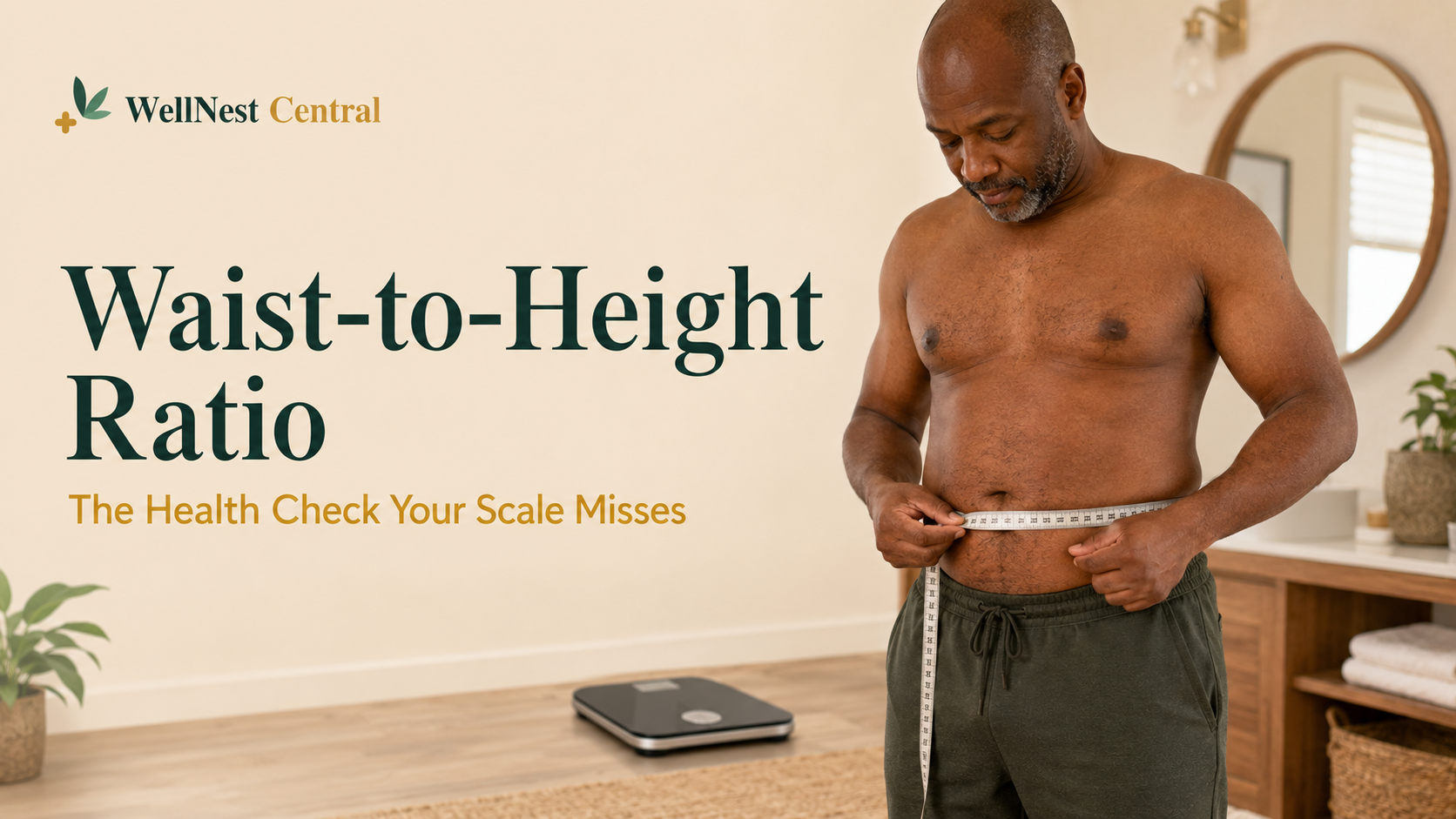
Your bathroom scale can tell you how much you weigh, but it cannot tell you where your body stores fat.
Two people may have the same weight and even the same body mass index, yet one may carry considerably more fat around the abdomen. This difference matters because excess abdominal fat is associated with a greater risk of metabolic and cardiovascular health problems.
A simple measurement called the waist-to-height ratio can provide another useful piece of information. It takes less than a minute, requires only a tape measure and may reveal something your scale cannot show.
The basic message is easy to remember:
Try to keep your waist measurement below half your height.
However, this measurement is a screening tool—not a diagnosis or a complete assessment of your health.
Table of Contents
ToggleWhat Is the Waist-to-Height Ratio?
Your waist-to-height ratio compares the circumference of your waist with your total height.
The calculation is:
Waist measurement ÷ Height measurement = Waist-to-height ratio
Both measurements must use the same unit. You can use centimetres for both measurements or inches for both.
For example, if your waist measures 84 centimetres and your height is 170 centimetres:
84 ÷ 170 = 0.49
This means your waist-to-height ratio is 0.49.
Unlike weight alone, this measurement considers both your height and the amount of fat stored around your middle.
Current NICE guidance on overweight, obesity and central adiposity recommends using waist-to-height ratio alongside BMI in adults with a BMI below 35 kg/m².
Why Your Weight Does Not Tell the Complete Story
Weight is useful, but it is only one measurement.
A scale cannot distinguish clearly between:
- Fat
- Muscle
- Bone
- Water
- Other body tissues
It also cannot show where fat is stored.
BMI has similar limitations. It uses height and weight to place someone into a general weight category, but it does not directly measure body fat or its distribution.
This is why a muscular person may have a relatively high BMI without carrying excessive body fat. Conversely, someone may fall within a “healthy” BMI range while still carrying a considerable amount of fat around the abdomen.
Waist-to-height ratio does not replace BMI, blood pressure, blood tests or a proper health assessment. It simply adds another useful perspective.
One advantage is that NICE uses the same waist-to-height classifications for adults of both sexes and all ethnicities. It can therefore be a practical screening measurement for diverse communities, including Black, Asian, Brown, mixed-heritage and White adults.
Individual risk still depends on many other factors, including age, ancestry, family history, blood pressure, blood glucose, cholesterol, smoking, medication and physical activity.
Why Abdominal Fat Matters
Not all body fat is stored in the same place.
Subcutaneous fat is the fat found directly beneath the skin. Visceral fat is stored more deeply around organs within the abdomen.
A tape measure cannot directly tell you how much visceral fat you have. However, a larger waist measurement can provide an indirect indication of central adiposity—the accumulation of fat around the middle.
Excess abdominal fat is associated with a greater risk of health conditions including:
- Type 2 diabetes
- High blood pressure
- Cardiovascular disease
- Stroke
- Fatty liver disease
- Abnormal blood lipid levels
- Metabolic syndrome
The National Institute of Diabetes and Digestive and Kidney Diseases notes that weight-related health risks may be particularly important when excess fat is carried around the waist.
This does not mean that everyone with a larger waist has a disease. It means that the result may be a useful reason to look more closely at your overall metabolic health.
How to Measure Your Waist Correctly
A small difference in where you position the tape can change the result, so try to use a consistent method.
Step 1: Find the Correct Position
Stand upright and find:
- The bottom of your ribs
- The top of your hip bones
Place the measuring tape around your waist at the midpoint between these two areas. This will normally be slightly above the belly button.
Do not automatically measure at the narrowest part of your torso or where your trousers normally sit.
Step 2: Position the Tape
Keep the tape:
- Parallel to the floor
- Flat against your body
- Snug but not digging into your skin
- Over bare skin or a thin layer of clothing
Make sure the tape is not twisted.
Step 3: Breathe Normally
Do not pull your stomach in or push it outward.
Breathe out naturally and take the measurement without holding your breath.
Step 4: Measure Again
Repeat the measurement once or twice. If the results differ, reposition the tape and try again.
For tracking purposes, measure under similar conditions each time. Avoid comparing one measurement taken immediately after a large meal with another taken first thing in the morning.
The NHS waist-to-height ratio calculator can also help you understand your result.
How to Calculate Your Result
Once you know your waist circumference and height, divide your waist by your height.
Remember to use the same unit for both numbers.
Example One
Height: 170 centimetres
Waist: 82 centimetres
82 ÷ 170 = 0.48
Example Two
Height: 170 centimetres
Waist: 94 centimetres
94 ÷ 170 = 0.55
The second person may weigh the same as the first but has a higher waist-to-height ratio and may be carrying more fat around the abdomen.
You do not need a special calculator. The calculation can be completed with the standard calculator on your telephone.
What Does Your Waist-to-Height Ratio Mean?
NICE currently classifies waist-to-height ratio in adults with a BMI below 35 kg/m² as follows:
Between 0.40 and 0.49
This is classified as healthy central adiposity and is not associated with increased health risk based on this measurement alone.
It does not guarantee perfect health. Blood pressure, blood glucose, cholesterol, fitness, sleep, nutrition and family history still matter.
Between 0.50 and 0.59
This is classified as increased central adiposity and is associated with increased health risk.
A result within this range does not diagnose diabetes, hypertension or cardiovascular disease. It suggests that reviewing your broader health and lifestyle may be worthwhile.
0.60 or Higher
This is classified as high central adiposity and is associated with a further increase in health risk.
Consider discussing the result with an appropriately licensed healthcare professional, particularly if you also have elevated blood pressure, abnormal blood sugar, high cholesterol, breathlessness, fatigue or a strong family history of metabolic disease.
A value below 0.40 should not automatically be interpreted as “even healthier.” A very low result may require context, particularly when accompanied by unintentional weight loss, poor appetite, weakness or concerns about undernutrition.
Is Waist-to-Height Ratio Better Than BMI?
It is more accurate to say that the two measurements provide different information.
BMI estimates weight relative to height.
Waist-to-height ratio estimates central adiposity relative to height.
Using both may offer a more useful picture than relying on either one alone. Waist-to-height ratio may be especially informative when:
- Your BMI is within the healthy range but your waist is increasing
- You have a muscular build
- Your weight has remained stable while your body composition has changed
- You have a family history of diabetes or cardiovascular disease
- You are concerned about abdominal weight gain
Neither measurement directly calculates your percentage of body fat or diagnoses a health condition.
For adults with a BMI of 35 kg/m² or above, NICE notes that waist-to-height ratio provides less additional information because the result is already highly likely to be elevated. A broader health assessment is more useful in this situation.
Who Should Be Cautious About Using This Measurement?
Adult waist-to-height classifications should not be applied to everyone without context.
The NHS advises that its standard calculator may not be suitable during pregnancy, for people with diagnosed or suspected eating disorders, or when a medical or growth condition significantly affects height.
Children require age-appropriate assessment and should not simply be judged using an adult weight-loss approach.
You should also seek medical advice if abdominal enlargement is:
- Sudden or unexplained
- Associated with pain
- Accompanied by vomiting
- Associated with severe bloating
- Accompanied by shortness of breath
- Combined with swelling in the legs
- Occurring alongside unexplained weight loss
A growing abdomen does not always result from body fat. Digestive problems, fluid accumulation and other health conditions can also affect abdominal size.
Personalised metabolic-health support
Want Help Turning Your Measurement Into a Practical Plan?
Waist-to-height ratio is one clue—not a diagnosis. WellNest Central can help you consider food, activity, sleep, stress, blood pressure and blood sugar together and choose realistic next steps.
What Should You Do If Your Result Is Above 0.50?
First, do not panic.
A single number does not define your health, appearance or worth. It is information—not a judgement.
Repeat the measurement to make sure it is accurate. Then consider the result alongside:
- Blood pressure
- Blood glucose or HbA1c
- Cholesterol and triglycerides
- Family history
- Physical activity
- Sleep quality
- Smoking and alcohol intake
- Medicines and medical conditions
If several risk factors are present, arrange an appropriate health assessment.
Practical Ways to Reduce Health Risk
You cannot choose exactly where your body loses fat. Repeated abdominal exercises may strengthen your core, but they do not guarantee that fat will disappear specifically from your waist.
A more useful approach is to improve the habits that support overall metabolic health.
Build Balanced Meals
Include a combination of:
- Protein
- Fibre-rich vegetables
- Whole or minimally processed carbohydrates
- Healthy fats
- Water or an unsweetened drink
Reduce the frequency of sugary drinks, highly processed snacks and unusually large portions without turning your eating routine into an extreme diet.
Increase Everyday Movement
Walking, cycling, swimming and other aerobic activities can support cardiovascular fitness and energy expenditure.
Small amounts of movement also count. If finding time is difficult, read Exercise Snacks: A Simple Way to Move More Every Day.
Include Strength Training
Muscle supports mobility, physical function and metabolic health.
Strength training does not have to mean bodybuilding. Body-weight exercises, resistance bands, machines or appropriately selected weights can all be useful.
Choose activities that suit your fitness, health and mobility.
Protect Your Sleep
Poor sleep may affect hunger, cravings, energy and your ability to remain physically active.
If you snore heavily, wake with headaches, feel excessively sleepy during the day or have witnessed pauses in breathing during sleep, discuss the possibility of sleep apnoea with a healthcare professional.
Manage Weight Without Extreme Restriction
Rapid diets may produce short-term weight loss but can be difficult to maintain.
A more sustainable plan supports nutrition, muscle preservation, sleep and repeatable daily habits. Read Why Weight Regain Happens After Weight Loss for a realistic explanation of why maintaining weight loss is not simply a matter of willpower.
Measure Progress Sensibly
Your waist measurement will naturally fluctuate slightly.
There is rarely a need to measure every day. Consider checking once every four weeks under similar conditions.
Also monitor improvements that may not appear immediately on the scale:
- Better blood pressure
- Improved blood glucose
- Greater strength
- Better sleep
- Increased walking capacity
- More energy
- Healthier eating habits
Progress is broader than one number.
Frequently Asked Questions
Does a Ratio Above 0.50 Mean I Have Diabetes?
No. It indicates increased central adiposity and a higher statistical health risk, but it does not diagnose diabetes.
Diabetes is diagnosed using appropriate blood tests assessed by a licensed healthcare professional.
Can I Have a Healthy BMI and an Elevated Waist-to-Height Ratio?
Yes. BMI does not show where fat is stored. This is one reason waist measurement can add useful information.
Can I Use Inches Instead of Centimetres?
Yes. Measure both your waist and height in inches, then divide the waist measurement by the height measurement.
Do not divide a measurement in inches by another measurement in centimetres.
How Often Should I Measure My Waist?
For most people tracking lifestyle progress, approximately once every four weeks is sufficient. Use the same method and similar conditions each time.
Can a Supplement Specifically Reduce Abdominal Fat?
No supplement can reliably choose where your body loses fat.
Supplements may sometimes be appropriate for a confirmed nutritional deficiency or another individual need, but they do not replace balanced nutrition, movement, sleep or appropriate medical care.
The Bottom Line
Your scale shows how much you weigh. It does not show where your body stores fat.
Waist-to-height ratio offers a simple way to estimate central adiposity and consider weight-related health risk alongside BMI and other health information.
Measure your waist correctly, divide it by your height and remember the central message:
Keep your waist below half your height.
If your result is above 0.50, do not respond with fear or an extreme diet. Confirm the measurement, consider your broader health and begin with realistic habits you can maintain.
Would you like a personalised plan that fits your real life?
Book Your One-on-One Consultation with WellNest Central for practical holistic health education and lifestyle guidance for weight management, blood sugar, nutrition, fatigue and metabolic health.
This article provides general health education and does not replace medical diagnosis or individual treatment. Always consult an appropriately licensed healthcare professional about concerning symptoms, abnormal test results or significant changes to your diet, medication or exercise routine.