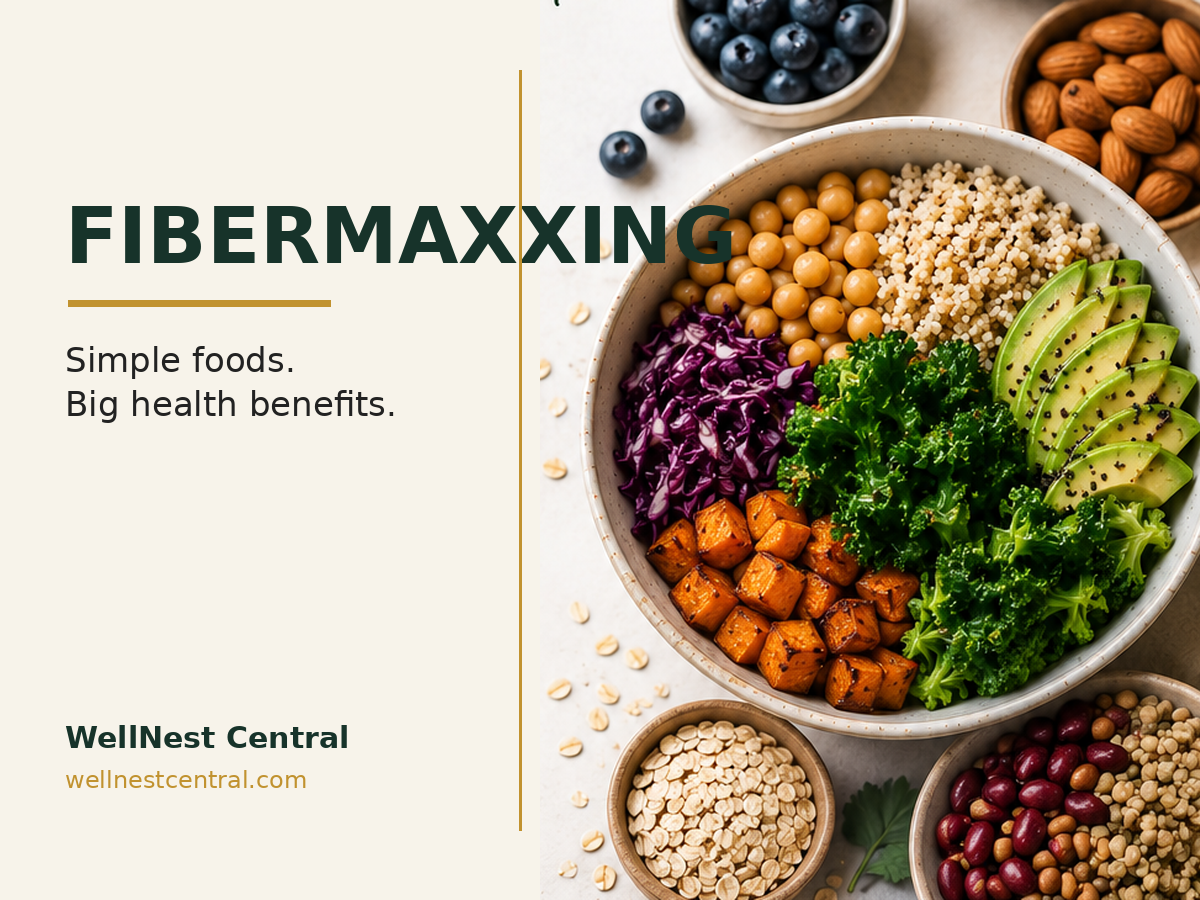
If you spend any time on TikTok, Instagram or other wellness platforms, you may have noticed a nutrient getting much more attention lately: fibre.
After years of protein dominating the nutrition conversation, fibermaxxing has emerged as a popular social-media trend. The idea is straightforward: intentionally eat more fibre-rich foods throughout your day.
Unlike many viral wellness trends, there is good science behind the basic idea. Fibre plays an important role in digestive health, satiety, blood-sugar regulation and cardiovascular health. The problem is that the word maxxing can make it sound as though you should consume as much fibre as possible.
You shouldn’t.
A better approach is to gradually bring more naturally fibre-rich foods into an overall balanced diet.
What Is Fibermaxxing?
Fibermaxxing is a social-media term for deliberately increasing the amount of dietary fibre you eat.
That might mean adding:
- beans or lentils to lunch
- oats and berries to breakfast
- more vegetables to dinner
- fruit, nuts or seeds as snacks
- whole grains in place of some refined grains
The underlying principle is not new at all. Health authorities have recommended fibre-rich foods for years. What has changed is the attention fibre is now receiving online.
UCLA Health reported in January 2026 that most Americans still fall short of recommended fibre intake, with typical intake around 15 grams per day.
Why Does Fibre Matter?
Fibre is the part of plant foods that our digestive system does not completely break down.
Although that sounds simple, its effects throughout the digestive and metabolic systems are significant.
1. Fibre supports healthy digestion
Insoluble fibre adds bulk and helps food move through the digestive tract, supporting regular bowel movements.
This is one reason vegetables, whole grains, nuts and seeds can be valuable parts of an everyday diet.
2. It feeds your gut microbiome
Certain fibres provide food for beneficial bacteria living in the gut.
This is one reason I prefer looking at gut health through the whole diet, rather than immediately reaching for another supplement.
Different plant foods provide different fibres and other useful compounds, so variety matters.
3. Fibre can help you feel fuller
Fibre-rich meals tend to take longer to digest and can increase satiety.
For someone working on weight management, this can be useful because a satisfying meal may make constant snacking or overeating less tempting.
That doesn’t make fibre a weight-loss miracle. It simply makes it one useful part of a sustainable eating pattern.
4. It can support healthy blood sugar
Soluble fibre can slow digestion and the absorption of carbohydrates.
Instead of thinking only about removing carbohydrates, it can therefore be useful to consider what accompanies them.
For example, compare a highly refined meal with a meal containing vegetables, beans and whole grains. The total eating experience—and its nutritional composition—is very different.
5. Fibre supports heart health
Soluble fibre can also help reduce LDL cholesterol by binding substances in the digestive tract and helping remove them from the body.
Higher dietary fibre intake is consequently associated with cardiovascular and broader metabolic benefits.
Soluble vs. Insoluble Fibre
You may hear these two terms when reading about fibre.
Soluble fibre absorbs water and forms a gel-like substance during digestion. Sources include oats, beans, apples, carrots and seeds.
Insoluble fibre does not dissolve in water. It helps add bulk and move material through the digestive tract. Whole grains, nuts, seeds and many vegetables provide it.
You don’t need to obsessively calculate each type.
Eating a varied selection of plant foods will generally provide a mixture of both.
The Best High-Fibre Foods
You don’t need an expensive powder or a product labelled high fibre to improve your intake.
Some of the simplest foods are excellent sources.
Beans and lentils are particularly useful because they provide fibre alongside plant protein and other nutrients. Older Dietary Guidelines food-source data, for example, lists roughly 8 grams of fibre in a half-cup serving of chickpeas and about 7.8 grams in a half-cup of cooked lentils.
Other practical choices include oats, berries, apples, pears, avocado, broccoli, carrots, leafy vegetables, whole grains, nuts, chia seeds and other seeds.
The important word here is variety.
Don’t turn fibermaxxing into eating enormous quantities of one fashionable food.
A Simple High-Fibre Day
You can make surprisingly meaningful changes without completely redesigning your diet.
Breakfast: oatmeal topped with berries and chia seeds.
Lunch: lentil or bean bowl with vegetables and whole grains.
Snack: an apple or berries with a small handful of nuts.
Dinner: vegetables alongside beans, lentils, potatoes with their skin or an appropriate whole grain.
Small additions across several meals are often much easier to maintain than trying to consume most of your fibre at once.
Personalised digestive and metabolic-health support
Want to Increase Fibre Without Overdoing It?
Your current intake, digestive tolerance, fluid intake and health needs all matter. WellNest Central can help you increase fibre gradually using foods and routines that fit your daily life.
Don’t “Max” Your Fibre Overnight
This is probably the most important part of the trend.
If your current diet is relatively low in fibre, suddenly eating very large amounts may leave you feeling worse rather than better.
A rapid increase can contribute to:
- gas
- bloating
- abdominal discomfort
- constipation, particularly when fluid intake is inadequate
Instead, introduce additional fibre gradually and make sure you’re drinking enough fluids.
UCLA Health specifically recommends increasing fibre slowly rather than going from “zero to 100.” People with gastrointestinal conditions such as IBS, Crohn’s disease or ulcerative colitis may need individualized guidance before substantially changing their fibre intake.
Fibermaxxing Doesn’t Have to Mean Counting Every Gram
Nutrition trends often turn eating into another numbers game.
I don’t think that needs to be the goal here.
Instead of constantly asking:
“How many grams of fibre have I eaten today?”
you can begin with a more practical question:
“Where is the plant food in this meal?”
Look at your plate.
Could you add beans?
Could breakfast include berries?
Could you choose whole grains more often?
Could you add another vegetable to dinner?
Could fruit and nuts replace one highly processed snack?
Those small decisions accumulate.
Food First, Supplements Second
Fibre supplements can have a place in some people’s diets, but they shouldn’t automatically replace fibre-rich whole foods.
Whole foods provide much more than isolated fibre. Fruits, vegetables, legumes, nuts, seeds and whole grains can also supply vitamins, minerals and a variety of plant compounds.
Current dietary guidance continues to emphasize whole, nutritious foods as the foundation of healthy eating.
The WellNest Central Approach: Don’t Chase the Trend—Use the Useful Part
I don’t believe good health requires following every new wellness trend.
Sometimes social media gives an old, useful idea a new name.
Fibermaxxing is a good example.
The valuable message isn’t:
“Eat as much fibre as possible.”
It’s:
Eat more varied, fibre-rich whole foods than you probably do now—and build the change gradually.
That’s far less dramatic.
But sustainable health is often built from ordinary choices repeated consistently.
Start With One Meal Today
You don’t need to overhaul your entire kitchen.
Choose one meal today and improve it.
Add berries to your oats.
Put lentils into your soup.
Add beans and vegetables to your lunch.
Choose fruit and nuts for a snack.
Then repeat it often enough that it stops feeling like a health challenge and simply becomes the way you eat.
That is where a social-media trend can turn into a genuinely useful lifestyle habit.
Want a Nutrition Plan That Fits You?
Generic wellness advice can only take you so far. Your lifestyle, goals, food preferences and current habits matter.
At WellNest Central, my approach is practical and holistic—helping you understand where realistic improvements can fit into your everyday life.
Book Your One-on-One Consultation
Educational information only. This article does not replace individualized medical or dietetic care.



Pingback: Bloated by Evening? Why Your Stomach Looks Bigger at Night