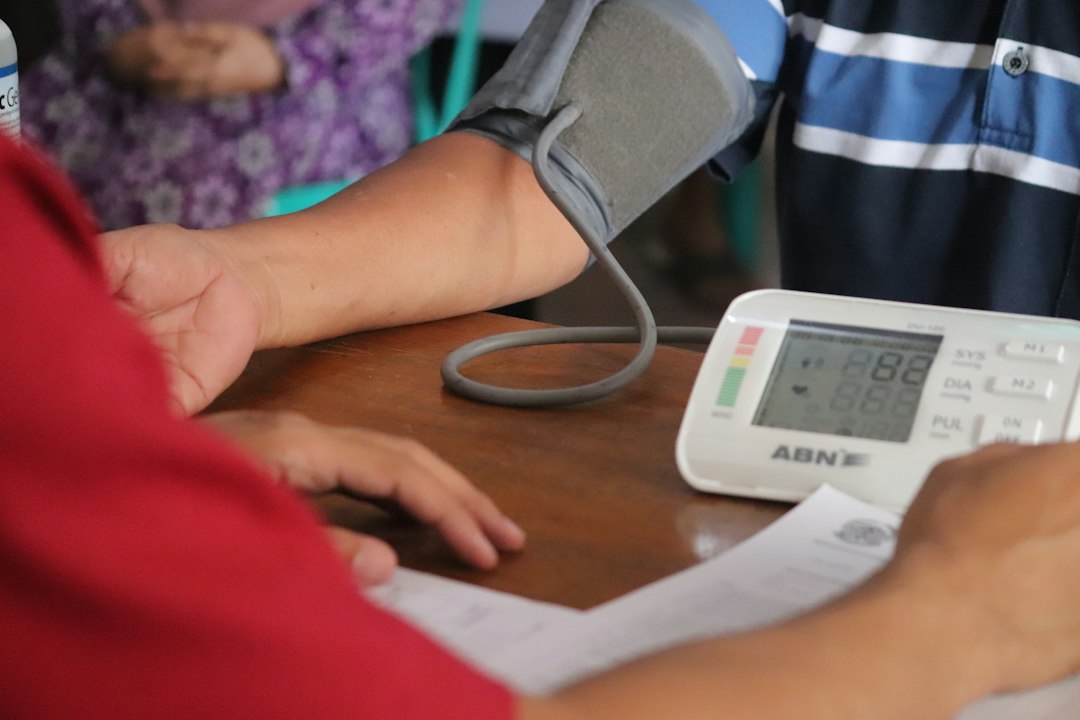
Quick answer: Repeated high blood pressure at home when the reading is normal at the doctor’s office deserves attention. It may be a pattern called masked hypertension, or it may reflect the cuff, timing or technique. The useful next step is to collect reliable readings and discuss the pattern with a healthcare professional, rather than judging your health by either one clinic visit or one home number.
Long-term high blood pressure can also affect the small vessels of the eye. Our guide to hypertensive retinopathy explains the symptoms, examination findings and urgent warning signs.
Picture this: your checkup seems reassuring, but the numbers on your home monitor keep climbing. It is tempting to decide that the machine is wrong. It is equally easy to assume a diagnosis from a few rushed checks. The NICE hypertension guideline recommends considering home or ambulatory monitoring when clinic and outside readings conflict. The difference is a reason to investigate, not a reason to dismiss either set of results.
Anthony Ofori | Medical Graduate in General Medicine | Founder, WellNest Central
Last updated: 27 September 2026
What is masked hypertension?
Masked hypertension describes blood pressure that looks acceptable in the clinic but is elevated when measured outside it. The reverse pattern—higher readings in the clinic than outside—is often called a white-coat effect. Neither label should be assigned from a single pair of measurements. A clinician needs a reliable series of readings and your health history to interpret the pattern.
Clinic measurements capture a short moment of your day. Home readings may reflect more of your ordinary routine, including work demands, sleep and medication timing. But “at home” does not automatically mean “accurate.” A small cuff, unsupported arm, recent caffeine or measuring just after activity can distort a reading. There is also a related situation in people already taking blood pressure medicine: clinic control can look good while blood pressure outside the clinic remains high. Mention any treatment you take when you share your readings.
First, check the monitor and your technique
The American Heart Association’s home-monitoring guidance recommends a validated automatic upper-arm monitor with a cuff that fits your arm. Wrist and finger devices are generally less reliable. Bring your monitor to an appointment so your healthcare team can check your technique and compare it with their equipment.
- Prepare: Avoid smoking, caffeine and exercise for 30 minutes before checking. Empty your bladder.
- Settle: Sit quietly for at least five minutes, with your back supported and both feet flat on the floor.
- Position: Put the cuff on bare skin and support your arm on a table at heart level. Do not talk during the measurement.
- Repeat: Take two readings about a minute apart and record both, with the date and time.
Our guide to why the first blood pressure reading may be higher than the second explains why a calm repeat reading often helps. A full bladder can also change a measurement; we cover that in a separate article on bladder fullness and blood pressure.
WellNest Central support
Turn your readings into useful questions
We can help you organise your home log and everyday habits so you arrive prepared for a focused discussion with your healthcare professional.
Look for a pattern, not one dramatic number
Choose times you can repeat under similar conditions. The CDC advises taking at least two readings one or two minutes apart and keeping a log. Your clinician may ask for morning and evening readings over several days. NICE describes a home-monitoring schedule of two measurements at each sitting, twice daily, for at least four days and ideally seven; it uses the average after leaving out the first day. Follow the plan your own clinician gives you, especially if you are changing treatment or have another condition.
Write down anything that might help explain a difference: the cuff and arm used, medicine and dose times, poor sleep, recent activity or symptoms. Show the actual numbers rather than just “it was high.” If you have a monitor that saves readings, take it to the visit. Do not change or stop prescribed medication based on home measurements without professional advice.
How will a clinician work out what it means?
Your healthcare professional may review your technique, cuff size and home average, then compare it with clinic results. A 24-hour ambulatory monitor—an automatic device worn through ordinary daily activities and sleep—can provide another view when readings disagree. NICE advises using ambulatory or home monitoring to investigate a suspected masked pattern.
Ask which blood pressure threshold applies to the way your readings were taken. Clinic and home cutoffs are not interchangeable, and professional guidelines can use different thresholds. Your age, other conditions, medicines and overall cardiovascular risk also influence the plan. Even if the average turns out to be reassuring, keep a record of the discussion and when to recheck.
When should you act quickly?
If a reading is suddenly above 180/120 mm Hg, wait at least one minute and check again. If it remains that high, contact a healthcare professional promptly. If you also have chest pain, shortness of breath, weakness, numbness, a change in vision or trouble speaking, seek emergency help immediately using your local emergency number. The American Heart Association gives this advice for severely high readings. New, serious symptoms also deserve urgent attention even when a home monitor gives a lower number.
The takeaway
High blood pressure at home but normal at the doctor is a pattern worth checking carefully. Use a suitable cuff, record repeated readings and bring the log and monitor to a healthcare professional. A good evaluation can separate measurement errors from a blood pressure pattern that needs care. If you would like support preparing your questions and lifestyle log, connect with WellNest Central.
This article provides general health education and does not replace individual medical advice, diagnosis, treatment or emergency care.

Pingback: Dizzy When You Stand Up? Why Your Blood Pressure May Drop - Wellnest Central