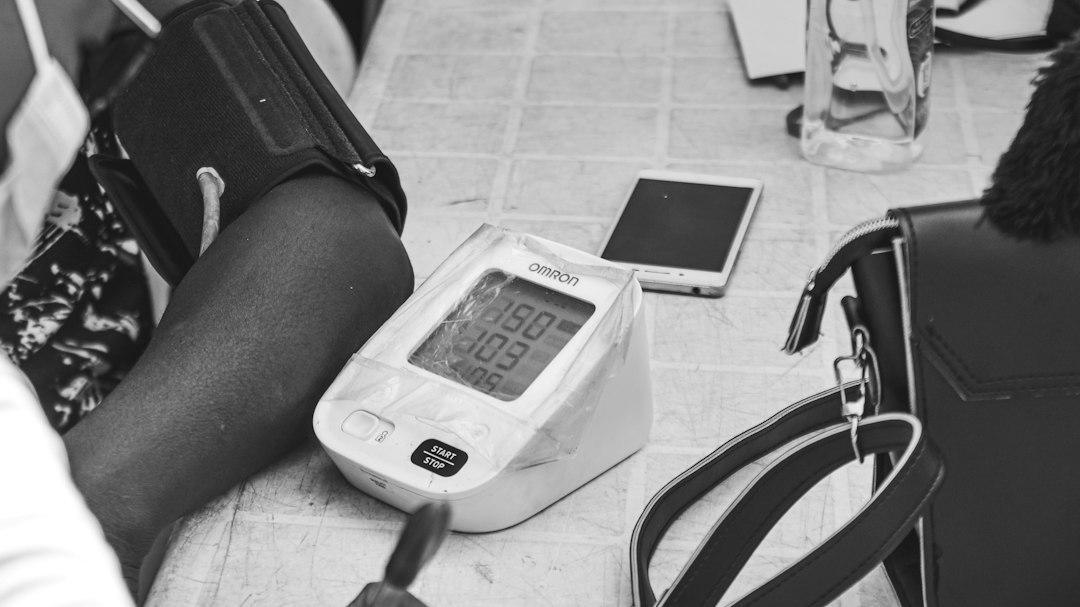
Quick answer: Your first blood pressure reading can be higher than the second because blood pressure changes from moment to moment. You may still be settling into the chair, or your arm, cuff or posture may not yet be right. Repeated measurements sometimes fall even when technique is good. The first reading is not automatically “wrong,” and the second is not automatically your “real” pressure. Record both, taken correctly, and look at the pattern over several days.
For a broader clinical overview, see our guide to high blood pressure nursing care, including assessment, education and monitoring priorities.
Perhaps your monitor reads 146/89, then 134/83 a minute later. It is tempting to keep the lower result and forget the first. But the difference itself can tell you something about how the measurement was taken. The American Heart Association (AHA) advises taking two readings one minute apart and recording the results each time you measure at home.
Anthony Ofori | Medical Graduate in General Medicine | Founder, WellNest Central
Last updated: 26 September 2026
Does the first reading usually run higher?
It can, but there is no rule that it must. In one study of repeated home measurements, the first systolic reading tended to be higher than later readings. That describes an average pattern in that study, not a guarantee for any one person on any one day. Your next reading could be similar or even higher.
Blood pressure is responsive. Walking in from another room, talking, checking your phone, muscle tension, recent caffeine or exercise, and a full bladder can all affect a measurement. Cuff fit and where you support your arm matter too. Sometimes the first result simply reflects the moment you pressed start. That is why a measurement routine is more useful than trying to explain one pair of numbers with a single cause.
How to take two readings you can compare
- Prepare. Avoid smoking, caffeine and exercise for about 30 minutes beforehand. Empty your bladder. Sit with your back supported, feet flat on the floor and legs uncrossed.
- Rest quietly for at least five minutes. Put your phone aside and do not talk. Support the arm on a table so the cuff sits at heart level.
- Check the equipment. Use a validated automatic upper arm monitor with a cuff that fits your arm. Place it on bare skin, following the monitor’s instructions.
- Measure twice. Take the first reading, wait at least one minute, then take the second without changing position. Write down both numbers and the time. Follow a different schedule if your healthcare professional has given you one.
These are the AHA’s core steps for home blood pressure monitoring. A small adjustment in posture can matter. Our related article explains why a full bladder may affect your blood pressure reading before you even put on the cuff.
WellNest Central support
Make sense of your home readings
Bring your blood pressure log and lifestyle questions to a WellNest Central consultation. We can help you prepare a clearer conversation with your healthcare professional.
Which number should you write down?
Keep both. Do not delete the higher reading simply because the second feels more reassuring. Equally, one high result is a snapshot, not a diagnosis by itself. If your clinician asks for a home log, they may use an average of properly taken readings over several days. Follow their instructions for how many days to measure and how to calculate or submit the results.
For example, if the two readings are 146/89 and 134/83, their simple average is 140/86. That number is useful as a record of this particular session; it is not a treatment decision. Clinical targets and diagnostic cutoffs depend on your situation and the guideline your care team uses. The UK NICE hypertension guideline calls for two consecutive home readings, at least a minute apart, in the morning and evening over multiple days when home monitoring is used to confirm a diagnosis.
At a clinic visit, let the team know if you have just hurried in, are uncomfortable or need the bathroom. They can give you time to settle and repeat an unexpectedly high result. A clinic reading that is repeatedly higher than your home pattern may also be a reason to discuss structured home or ambulatory monitoring. One pair of readings at home alone does not establish a “white coat” effect.
What if the readings are very different?
First check the cuff position, fit and arm support. Rest again, then follow the measurement instructions you received from your care team. If large differences keep happening despite careful technique, share the full log and bring your monitor to an appointment so a professional can check how you use it and compare it with clinic equipment. Do not change medication doses based on one unusually low or high second reading.
Try to measure at consistent times. Note anything unusual, such as poor sleep, illness, pain, a missed medicine or a reading taken shortly after coffee. You do not need to explain every small change. The goal is a reliable picture over time, rather than a perfect single number.
When does a high reading need urgent attention?
If a reading is above 180 systolic and/or above 120 diastolic, wait at least one minute and recheck as the AHA recommends. If it remains that high, contact a healthcare professional immediately. If you also have chest pain, shortness of breath, new weakness or numbness, a vision change, difficulty speaking or another concerning symptom, call your local emergency number right away. In Germany, that is 112. Do not wait for the number to fall on its own.
The takeaway
A higher first blood pressure reading is fairly common, yet either reading could be affected by timing or technique. Rest first, measure twice a minute apart, record both and discuss the longer pattern with your healthcare professional. If you want help organising that log and your questions about everyday habits, connect with WellNest Central.
This article provides general health education and does not replace individual medical advice, diagnosis, treatment or emergency care.


Pingback: High Blood Pressure at Home but Normal at the Doctor: What Does It Mean? - Wellnest Central
Pingback: Blood Pressure Cuff Too Small? How to Check the Fit