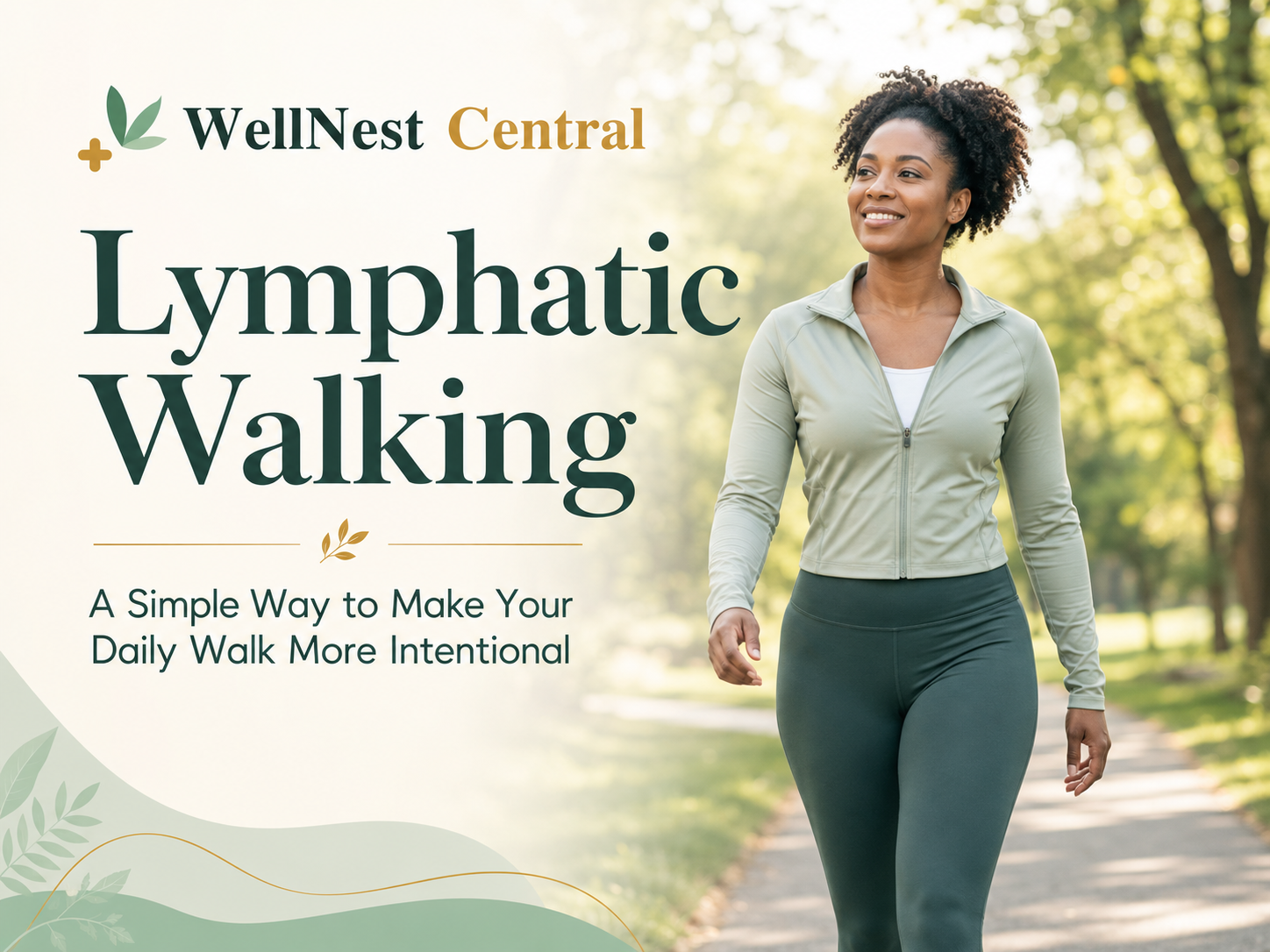
Walking is one of the simplest forms of physical activity.
You do not need a gym membership.
You do not need expensive equipment.
And you do not need a complicated routine.
Recently, a wellness trend called lymphatic walking has been gaining attention.
The idea is simple: instead of simply walking from one place to another, you become a little more intentional about your posture, breathing, arm movement and pace.
The lymphatic system is an important part of the body’s immune and fluid-balancing systems. It helps return excess fluid from tissues, transports immune cells and plays a role in absorbing certain fats.
Unlike the cardiovascular system, the lymphatic system does not have a central pump like the heart. Muscle contractions and body movement help move lymph through lymphatic vessels, which is one reason regular activity is useful.
That does not mean you need a special “detox walk.”
It simply means that walking and other forms of movement can be good for your body.
And if calling it lymphatic walking helps you become more intentional about moving, breathing and staying active, that can be a positive habit.
Want Personalised Support With Your Health Goals?
If you are trying to improve your nutrition, weight management, energy, movement habits or metabolic health, your plan should fit your own lifestyle.
Through WellNest Central, you can book a private one-on-one online consultation for practical, personalised health and lifestyle guidance.
Book Your One-on-One Consultation
What Is Lymphatic Walking?
Lymphatic walking is not a completely different type of exercise.
It is essentially ordinary walking with more attention to:
- Upright posture
- Natural arm movement
- Relaxed shoulders
- Comfortable breathing
- A steady walking rhythm
The trend has recently been promoted as a way of supporting normal lymph movement.
Current expert commentary suggests that these extra elements may make a walk more mindful, but there is not strong evidence that lymphatic walking is superior to ordinary walking for lymphatic health.
That distinction is important.
You do not have to perform a special technique for walking to be beneficial.
Regular walking is already valuable.
Why Does Movement Matter for the Lymphatic System?
Your lymphatic system helps maintain normal fluid balance and forms part of your immune system.
Because it does not have a heart-like pump, movement of surrounding muscles helps move lymphatic fluid through the body.
This is why exercise is included as part of established management for people with lymphoedema, alongside other measures such as compression, skin care and specialist treatment when appropriate.
For someone without lymphoedema, the message can be much simpler:
Move regularly.
Walking gives your muscles repeated contractions while your arms and legs move rhythmically.
That is one of many reasons movement is good for the body.
How to Do a Lymphatic Walk
You do not need to turn this into another complicated wellness routine.
Try these simple steps.
1. Stand Tall
Keep your body upright without becoming rigid.
Imagine your head gently lifting upward while your shoulders remain relaxed.
2. Relax Your Shoulders
Avoid walking with your shoulders pulled upward toward your ears.
Let them sit naturally.
3. Allow Your Arms to Swing
Do not force an exaggerated movement.
Simply allow your arms to move naturally with your walking rhythm.
4. Breathe Comfortably
You can pay attention to slower, deeper breathing if it feels comfortable.
You do not need to force very deep breaths or follow a complicated breathing pattern.
5. Walk at a Comfortable Pace
Your walk does not have to be intense.
Start at a pace you can maintain comfortably.
How Long Should You Walk?
If you are starting from a relatively inactive lifestyle, even a short walk can be worthwhile.
You might begin with:
10 minutes.
Then gradually increase to:
15 minutes.
Then perhaps:
20–30 minutes.
You do not need to achieve everything on the first day.
Public-health recommendations commonly encourage adults to work toward at least 150 minutes of moderate-intensity physical activity per week, but health benefits can begin with smaller amounts of activity.
The important thing is to establish a habit you can maintain.
Is Lymphatic Walking Better Than Regular Walking?
At the moment, there is no strong evidence showing that the social-media version of lymphatic walking is superior to ordinary walking.
That does not make the practice useless.
It simply means we should keep the claims realistic.
The posture, breathing and arm movement involved may make your walk feel more intentional and relaxing.
But ordinary walking already provides meaningful health benefits.
So instead of asking:
“Is lymphatic walking better?”
A more helpful question may be:
“Will this help me walk more consistently?”
If the answer is yes, the trend may still be useful.
PERSONALISED WELLNESS SUPPORT
Want a walking routine that fits your real life?
A one-on-one consultation can help you turn walking, movement and recovery into a practical routine shaped around your health, schedule and personal goals.
The Wider Benefits of Walking
The strongest reasons to walk are not limited to the lymphatic system.
Regular physical activity is associated with benefits for cardiovascular health, blood pressure, sleep, mood, blood-sugar regulation, physical function and long-term health.
Heart Health
Regular physical activity can help reduce the risk of cardiovascular disease and can contribute to healthier blood pressure and cholesterol levels.
Blood Sugar and Metabolic Health
Physical activity can help reduce the risk of type 2 diabetes and metabolic syndrome.
Mood and Stress
Physical activity can reduce feelings of anxiety and support mental wellbeing.
Mobility
Staying physically active can help preserve physical function as we grow older.
Healthy Weight
Physical activity can support weight management, although the amount needed varies from person to person.
Need Help Turning Healthy Habits Into a Routine?
Knowing what to do is often easier than doing it consistently.
If you are struggling with low energy, weight management, nutrition, activity or maintaining healthy lifestyle habits, a personalised plan can make the process more practical.
Through WellNest Central, you can book a private one-on-one consultation focused on your individual lifestyle and goals.
You Do Not Need a Detox Routine
One area where wellness trends can become confusing is the word “detox.”
Your body already has sophisticated systems involved in processing and eliminating waste products.
You do not need to assume that one special walk is “flushing toxins” out of your body.
A better way to think about lymphatic walking is:
It is movement.
Movement encourages muscle activity.
Muscle activity contributes to normal lymph movement.
Walking also offers many other established health benefits.
That is enough.
There is no need to exaggerate the claim.
A Simple Lymphatic Walking Routine
Here is an easy routine you could try.
Before You Start
Stand comfortably.
Relax your jaw and shoulders.
Take a few normal, slow breaths.
Minutes 1–5
Walk at an easy pace.
Allow your arms to move naturally.
Minutes 5–15
Continue walking.
Keep your posture tall but relaxed.
Let your breathing become slightly deeper if that feels natural.
Minutes 15–20
Continue at a comfortable pace or gradually slow down.
Finish feeling refreshed rather than exhausted.
If twenty minutes feels too much, start with ten.
The goal is not perfection.
The goal is consistency.
Make Walking Easier to Maintain
The best wellness routine is often the one that fits naturally into your life.
Try attaching walking to something you already do.
For example:
- Walk after breakfast
- Take a short walk during your lunch break
- Walk after dinner
- Walk while making a phone call
- Park a little farther away
- Take a short walk before starting work
- Invite a friend or family member
You do not necessarily need one long exercise session.
Movement accumulated throughout the day still counts toward being more physically active.
Do You Need 10,000 Steps?
No single step number works for everyone.
The most important change for someone who is inactive is usually to begin moving more.
You do not have to wait until you can complete 10,000 steps before your walking becomes worthwhile.
Current public-health guidance emphasizes that adults gain health benefits from being physically active and sitting less, even before reaching the full weekly exercise recommendation.
So if you currently walk very little, adding ten or fifteen minutes a day can be a meaningful beginning.
Who Should Be More Careful?
Most healthy adults can begin with gentle walking.
However, if you have:
- Significant swelling in an arm or leg
- Known lymphoedema
- Severe shortness of breath
- Chest pain
- Significant heart or vascular disease
- Recent surgery
- A medical condition that limits exercise
it is sensible to discuss your activity plan with an appropriate healthcare professional.
People with lymphoedema may require a personalised programme that can include exercise alongside compression, specialised lymphatic techniques and other treatment.
Frequently Asked Questions
Does Lymphatic Walking Really Work?
Movement does help support normal lymph movement because muscle activity contributes to lymphatic flow.
However, there is currently no strong evidence that a special social-media “lymphatic walking” technique works better than ordinary walking.
Do I Need to Walk Fast?
No.
You can begin at a comfortable pace.
If your fitness improves, you can gradually increase your walking speed or duration.
Do I Need Special Shoes?
No specialised lymphatic-walking shoe is required.
Comfortable footwear that allows you to walk safely is usually sufficient.
Can I Do It Every Day?
For most healthy adults, gentle walking can be part of everyday activity.
The intensity and duration should suit your individual fitness and health.
Can Walking Help With Weight Management?
Physical activity can contribute to maintaining a healthy weight, particularly when combined with sustainable nutrition and lifestyle habits.
Put On Your Shoes and Let Your Walk Count
Health does not always require a complicated strategy.
Sometimes a useful health habit looks like this:
Put on your shoes.
Step outside.
Stand tall.
Relax your shoulders.
Let your arms move.
Breathe.
Walk.
And repeat it tomorrow.
You do not need to chase every wellness trend.
But sometimes a trend can remind us of something valuable that we already knew:
Our bodies benefit from regular movement.
If lymphatic walking encourages you to become more active, more mindful of your posture and more consistent with your daily walks, then it can be a useful way to approach an already valuable habit.
Ready for Personalised Support?
If you would like personalised guidance with nutrition, weight management, low energy, lifestyle habits or metabolic health, you can book a private one-on-one online consultation through WellNest Central.
We can work together to create practical habits that fit your lifestyle rather than relying on extreme or unsustainable routines.
Book Your One-on-One Consultation Today
Final Thought
The most useful part of lymphatic walking may not be that it is a new trend.
It may simply be the reminder to move.
Walk regularly.
Breathe comfortably.
Move naturally.
Keep it simple.
And allow small habits, repeated consistently, to support your long-term health.