Walking is one of the simplest ways to become more physically active.
But what happens when an ordinary walk starts feeling a little too easy?
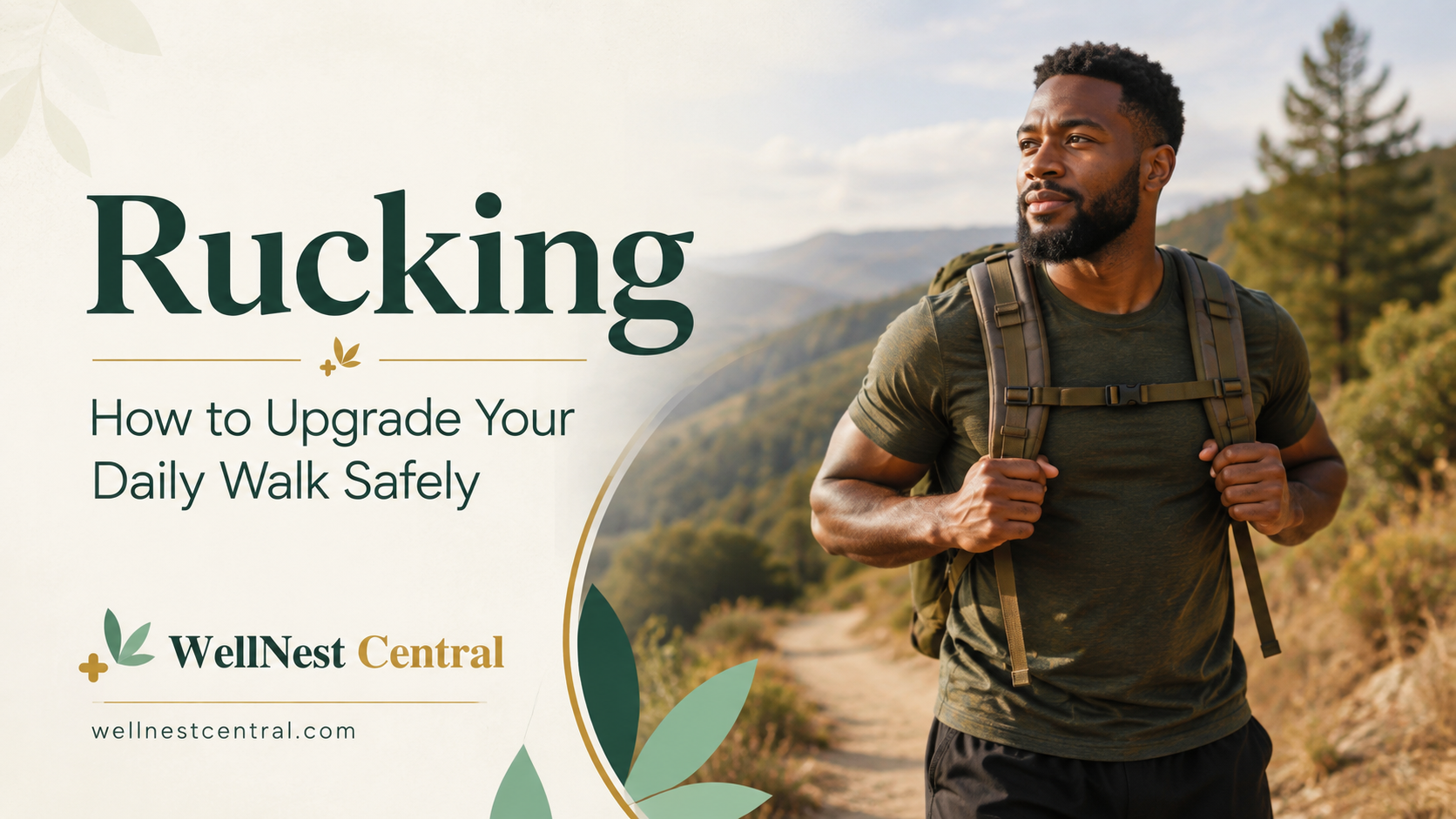
One option attracting attention is rucking.
Rucking simply means walking while carrying additional weight, usually in a backpack or weighted vest.
You still get many of the benefits of walking, but your body has to work harder because of the extra load.
That does not mean you need to start with a heavy backpack.
The useful part of rucking is not how much weight you can carry.
It is how intelligently you can add a little more challenge to something you may already be doing.
If you read our recent post on lymphatic walking, you will notice an interesting connection.
Lymphatic walking focuses more on posture, breathing and natural movement.
Rucking adds a different element:
Resistance.
What Is Rucking?
Rucking means walking while carrying additional weight.
Traditionally, the term comes from military training with a loaded rucksack.
Today, many people use a simpler version for fitness.
The additional weight may come from:
- A backpack
- A weighted backpack
- A weighted vest
The idea is simple:
Walking + resistance.
You do not necessarily need to walk faster.
Your body simply has to work harder to move the additional load.
Why Is Rucking Becoming Popular?
One reason is simplicity.
You do not necessarily need:
- A gym
- Complicated equipment
- Advanced exercises
- Long workout sessions
For people who already enjoy walking, rucking can be an easy way to make the activity more challenging.
Instead of replacing your normal routine, you upgrade something you already know how to do.
That can make the habit easier to maintain.
What Happens When You Add Weight to Your Walk?
Adding weight increases the physical demand of walking.
Your muscles have to move more total weight.
Your heart and lungs may also work harder.
This can increase:
- Exercise intensity
- Energy expenditure
- Muscular demand
- Cardiovascular demand
The important point is not that more weight is always better.
It is simply that a reasonable amount of added resistance can make walking more demanding.
Potential Benefits of Rucking
Increased Exercise Intensity
An ordinary walk may be fairly gentle.
Once you add resistance, the same route can become more challenging.
This can be useful for someone who wants to increase exercise intensity without immediately moving into running or high-impact training.
Greater Energy Expenditure
Moving more weight generally requires more energy.
That means weighted walking may increase energy expenditure compared with walking the same distance without additional weight.
However, rucking should not be treated as a magic weight-loss method.
Weight management still depends on the bigger picture:
- Nutrition
- Physical activity
- Sleep
- Stress
- Consistency
- Sustainable habits
Rucking can simply be one useful tool.
More Muscular Demand
Your legs, hips and core all have to manage the additional load.
Your upper body also helps stabilise the backpack or vest.
This can make rucking feel like a combination of cardiovascular exercise and light resistance work.
If maintaining strength and muscle is one of your goals, you may also find our article Strong Is the New Skinny: Why Strength Training Matters helpful.
Functional Fitness
Rucking also resembles activities we regularly perform in everyday life.
For example:
- Carrying groceries
- Walking with luggage
- Carrying a child
- Wearing a backpack while travelling
- Moving household items
These tasks require strength, stability, endurance and mobility.
That is why weighted walking can also support functional fitness.
Rucking Is Not a Magic Weight-Loss Method
Adding weight can make walking more demanding.
But that does not mean you need to carry as much weight as possible.
If the load becomes so heavy that you develop pain, lose good posture or stop enjoying the activity, you may be doing too much.
A sustainable programme is usually more valuable than an extreme routine.
How Much Weight Should a Beginner Carry?
If you are new to rucking, start light.
You do not need to begin with a heavy backpack.
Your first goal should be simple:
Can I walk comfortably with the added load while maintaining good posture and without pain?
If yes, you can gradually progress.
If no, reduce the weight.
There is no advantage in starting too heavy.
Personalised fitness and lifestyle support
Want to Add Rucking to Your Routine Safely?
Your current fitness, joint health, footwear, walking route and starting weight all matter. WellNest Central can help you build a gradual activity plan that supports your wider health goals.
A Simple Beginner Rucking Routine
Step 1: Start Light
Choose a load that feels manageable.
The backpack should not dramatically change the way you walk.
Step 2: Walk for 10–20 Minutes
Your first session does not need to be long.
Try a short walk and pay attention to how your body feels.
Notice your:
- Back
- Shoulders
- Knees
- Feet
- Breathing
Step 3: Keep Your Posture Upright
Avoid leaning excessively forward.
Try to keep your:
- Head upright
- Shoulders relaxed
- Core gently engaged
- Walking stride natural
Step 4: Wear Comfortable Footwear
Your feet are supporting both your body and the additional load.
Comfortable, supportive shoes are important.
Step 5: Recover
You do not need to ruck every day.
Allow your body time to adapt.
Step 6: Progress Gradually
Once your current routine becomes comfortable, increase only one thing at a time.
You might increase:
- Distance
- Duration
- Weight
Avoid increasing all three at once.
Weight or Distance: Which Should You Increase First?
For beginners, building consistency and walking tolerance first is usually a sensible approach.
For example:
Week 1: Light load, 15 minutes
Week 2: Same load, 20 minutes
Week 3: Same load, 25 minutes
Week 4: Consider a small increase in resistance if everything feels comfortable
The goal is gradual adaptation.
Progress does not need to be fast.
Good Form Matters
Good form becomes more important when you add extra weight.
Keep the Load Close
A backpack that moves around excessively may become uncomfortable.
Secure the load so it stays relatively stable.
Use Both Shoulder Straps
Avoid carrying a loaded backpack on one shoulder.
The weight should be distributed as evenly as possible.
Do Not Hunch Forward
If you have to lean dramatically forward, the load may be too heavy.
Keep Your Steps Natural
Do not force a longer stride simply because you are carrying weight.
Walk naturally.
Pay Attention to Pain
Muscular effort is normal.
Sharp or persistent pain is not something to ignore.
If something feels wrong, stop and reassess.
Backpack or Weighted Vest?
Both can work.
Backpack
A backpack is practical because many people already own one.
It is also easy to adjust the amount of weight.
Try to secure the contents so they do not move around excessively.
Weighted Vest
A weighted vest distributes resistance around the torso.
Some people may find this more balanced than a backpack.
But the same rule applies:
More weight is not automatically better.
Choose the option that feels stable, comfortable and manageable.
Can Rucking Replace Strength Training?
Not completely.
Rucking increases muscular demand, but it does not provide the same range of resistance as exercises such as:
- Squats
- Rows
- Presses
- Lunges
- Resistance-band exercises
- Deadlifts
A balanced routine might include:
Walking
Rucking occasionally
Strength training
Mobility and recovery
These activities can complement one another.
Can Rucking Help With Weight Management?
It may contribute by increasing the energy cost of walking.
But the more important question is:
Will you continue doing it consistently?
A moderate, enjoyable routine performed regularly is usually more useful than one very difficult session followed by several days of inactivity.
Consistency still matters most.
Who Should Be More Cautious?
Rucking adds extra load to the body.
If you have significant:
- Back or neck problems
- Joint problems
- Balance difficulties
- Heart or respiratory disease
- Recent surgery
- Significant injury
- Exercise restrictions
it is sensible to get appropriate professional advice before starting weighted walking.
Your individual health situation matters more than any fitness trend.
Do You Have to Ruck?
No.
Regular walking remains an excellent activity.
Rucking is simply an optional progression.
If normal walking already feels challenging, continue walking.
If you are just beginning to become more active, build the walking habit first.
If ordinary walking feels comfortable and you want more challenge, rucking becomes another option.
Rucking vs. Lymphatic Walking
These two recent WellNest Central topics are different, but they share the same basic idea:
Make movement more intentional.
Lymphatic walking focuses more on:
- Posture
- Breathing
- Natural arm movement
- Comfortable movement
Rucking focuses more on:
- Added resistance
- Greater physical demand
- Progressive loading
- Functional strength and endurance
One is not necessarily better than the other.
They simply serve different purposes.
How to Make Rucking a Habit
Keep it simple.
Choose one or two days each week.
Use a familiar walking route.
Prepare your backpack in advance.
Start with a manageable load.
Track your distance or time if that motivates you.
Then progress gradually.
The goal should not be:
How heavy can I go?
A better question is:
How can I make this sustainable?
Final Thought
Rucking is a good example of how fitness does not always require a completely new workout.
Sometimes you can take something simple that already works and make it slightly more challenging.
Walking becomes weighted walking.
Ten minutes becomes twenty.
A light backpack becomes slightly heavier.
Your body adapts.
Your confidence grows.
And movement becomes part of your lifestyle.
Start light.
Walk comfortably.
Maintain good form.
Progress gradually.
And let every walk count.
Ready for Personalised Support?
If you would like personalised guidance with nutrition, weight management, low energy, physical activity, lifestyle habits or metabolic health, you can book a private one-on-one online consultation through WellNest Central.
The goal is to build a practical approach that fits your lifestyle, abilities and long-term goals.
Book Your One-on-One Consultation Today