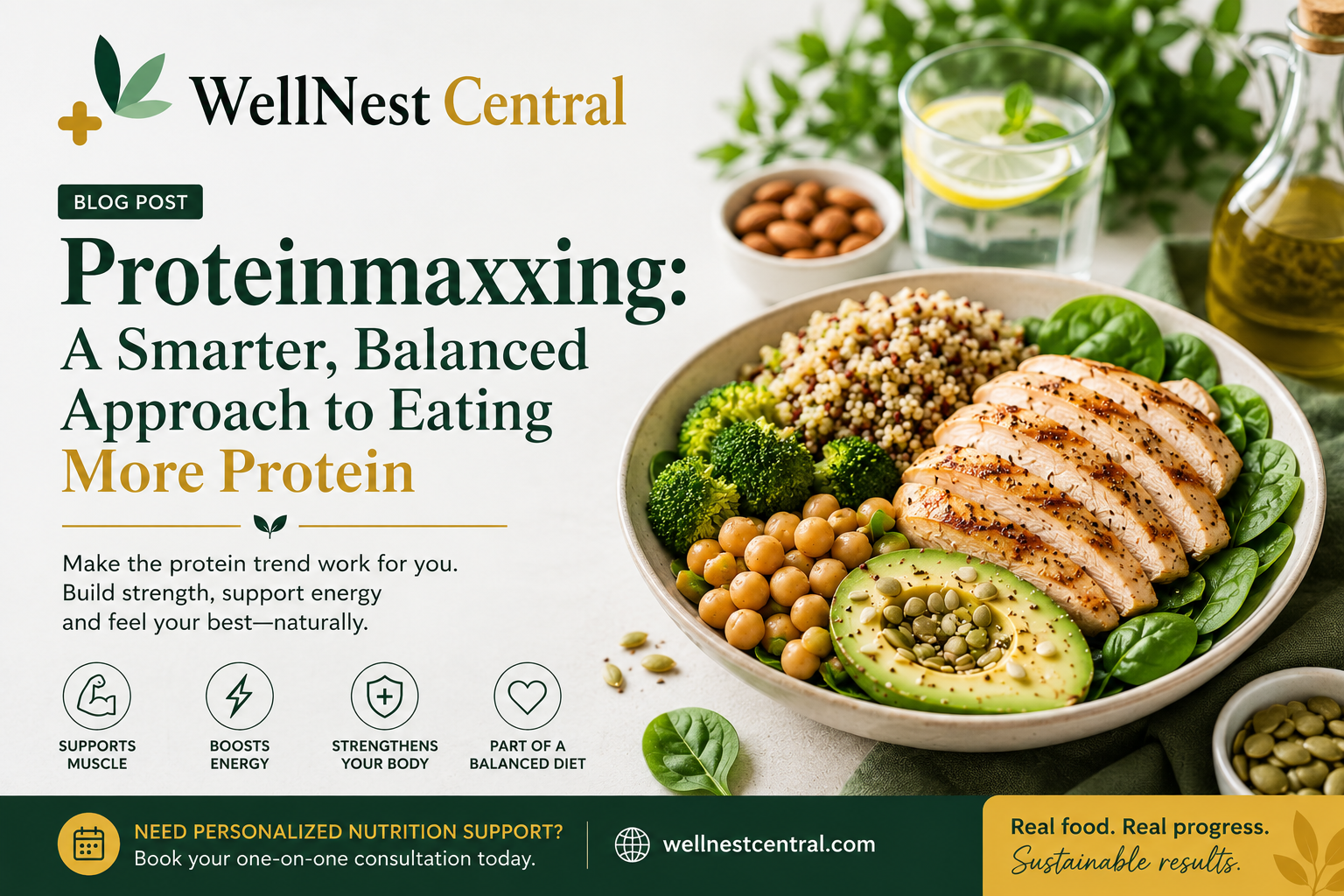
Protein is having a moment.
Walk through a supermarket or scroll through social media and you will see protein everywhere:
Protein yogurts.
Protein cereals.
Protein drinks.
Protein snacks.
Protein desserts.
High-protein meal ideas.
For many people, this increased interest can actually be a positive development.
Protein is an essential nutrient, and paying more attention to how much you eat can be particularly useful if you are physically active, trying to preserve muscle, managing your weight or simply trying to improve the quality of your meals.
The current trend known as proteinmaxxing encourages people to make protein a bigger priority.
The useful question is not whether protein is good or bad.
It is:
How can you use this trend in a way that genuinely supports your health?
Current dietary guidance continues to emphasise adequacy, balance, moderation and variety as the foundations of a healthy diet. Protein is important, but it works best as part of that bigger picture.
PERSONALISED NUTRITION SUPPORT
Make protein work for your goals
A one-on-one consultation can help you choose realistic protein targets and build balanced meals around your appetite, activity, culture and health needs—without turning food into another rigid rule.
Why Protein Deserves Attention
Protein provides amino acids that your body uses for important structural and functional roles, including building and maintaining body tissues.
It is especially well known for its relationship with muscle.
But muscle is not only important for people who want to look athletic.
Muscle helps you:
- Walk and climb stairs
- Lift and carry things
- Maintain strength
- Stay physically independent as you age
- Recover from exercise
- Support everyday movement
Protein can also contribute to satiety as part of a balanced meal.
That makes it an important consideration in healthy ageing, physical activity and weight-management strategies.
How Much Protein Do You Actually Need?
There is no single number that is perfect for every person.
Protein requirements can vary according to factors such as:
- Age
- Body size
- Physical activity
- Health status
- Pregnancy
- Weight-management goals
- Muscle-building goals
Protein needs vary with age, body size, activity, health and goals. The World Health Organization notes that protein providing roughly 10–15% of daily energy is generally sufficient for many adults, while some people—including those actively building or maintaining substantial muscle—may need a different approach. More is not automatically better, particularly when kidney health or other medical considerations are involved.
That does not mean everyone should calculate every gram they eat.
For many people, a simpler starting point is to make sure there is a meaningful source of protein in their main meals.
What Does a Protein-Focused Meal Look Like?
You do not necessarily need special “high-protein” products.
Many ordinary foods provide protein naturally.
Good options include:
Eggs
Eggs are convenient and can easily be combined with vegetables, whole-grain bread or other foods to create a balanced meal.
Fish
Fish provides protein and can also provide other valuable nutrients depending on the type.
Poultry and Lean Meat
Chicken, turkey and other lean meats can be practical protein sources when they fit your eating preferences.
Greek Yogurt, Quark and Cottage Cheese
These can be useful at breakfast, as snacks or as part of meals. If yoghurt is one of your regular choices, read How to Choose a Healthy Yoghurt.
Beans and Lentils
Legumes provide protein together with fibre and other nutrients.
They are particularly useful because they contribute to more than one part of a balanced diet.
Tofu and Other Soy Foods
Plant-based protein sources can provide excellent variety.
Nuts and Seeds
Nuts and seeds contribute protein as well as healthy fats and other nutrients.
WHO recommends getting nutrients through a varied diet and specifically includes foods such as legumes, whole grains, fruits, vegetables, nuts and both plant and animal protein sources within healthy dietary patterns.
The Best Part of the Protein Trend
One positive effect of proteinmaxxing is that it has encouraged many people to look at what is actually on their plate.
Someone who previously ate:
Coffee and a pastry for breakfast
may begin adding yogurt or eggs.
Someone who regularly ate a very carbohydrate-heavy lunch may begin adding beans, fish or chicken.
Someone trying to lose weight may begin thinking not only about eating less, but also about preserving strength and nourishment.
Those can all be useful improvements.
The goal is to keep the useful part of the trend while making it sustainable.
Do Not Forget the Rest of Your Plate
A healthy plate should not become:
Protein + protein + protein.
Think of protein as one important part of a complete meal.
Your diet still benefits from:
Vegetables
Aim for variety.
Different colours often mean different combinations of nutrients.
Fruit
Fruit can provide fibre, vitamins, minerals and naturally occurring plant compounds.
Fibre-Rich Carbohydrates
Examples include:
- Oats
- Brown rice
- Potatoes
- Whole-grain bread
- Beans
- Lentils
- Whole-grain pasta
Carbohydrates do not have to be eliminated simply because you are increasing protein.
Healthy Fats
Foods such as avocado, nuts, seeds and olive oil can form part of a balanced eating pattern.
Fluids
Do not become so focused on food macros that you forget hydration.
WHO’s current healthy-diet guidance specifically emphasises balance across protein, carbohydrates and fats, together with dietary diversity.
Protein and Weight Management
Protein can be useful within a weight-management plan, but it should not be treated as a magic weight-loss nutrient.
The German Nutrition Society notes that when energy intake is appropriate, simply increasing protein intake above requirements does not appear to automatically reduce body weight, body fat or waist circumference.
That is useful information.
It means you can stop looking for one nutrient to do everything.
Successful long-term weight management still involves the wider picture:
- Overall food intake
- Food quality
- Physical activity
- Sleep
- Stress
- Medication
- Medical conditions
- Daily routines
- Consistency
Protein can support that plan.
It does not have to become the entire plan.
Protein and Healthy Ageing
Protein becomes especially important to think about as we get older.
Maintaining strength and muscle can support mobility, independence and quality of life.
That is one reason the DGE protein reference increases for adults aged 65 and above.
But protein works best alongside movement.
If preserving muscle is one of your goals, think about combining appropriate protein intake with regular physical activity and resistance exercise suited to your ability.
Do You Need Protein Powder?
Not necessarily.
Protein powders can be convenient.
For example, they may help someone who:
- Has difficulty eating enough protein
- Has a very busy schedule
- Has a reduced appetite
- Exercises intensively
- Needs a convenient option
But they are not compulsory.
You can obtain protein through ordinary foods.
Think of supplements as tools rather than requirements.
A Simple Way to Improve Your Meals
Instead of completely rebuilding your diet tomorrow, try this simple question:
Where is my protein?
Look at each main meal.
If the meal already contains a useful protein source, great.
If not, consider adding one.
For example:
Breakfast
Instead of:
Toast + coffee
Try:
Whole-grain toast + eggs + fruit
Lunch
Instead of:
Rice + sauce
Try:
Rice + vegetables + beans, fish or chicken
Snack
Instead of:
Biscuits alone
Try:
Fruit + Greek yogurt or a small handful of nuts
Dinner
Instead of:
Pasta alone
Try:
Pasta + vegetables + lentils, tofu, fish or another protein source
You do not need a perfect diet.
You need practical improvements you can repeat.
A Better Question Than “How Much Protein Can I Eat?”
Instead of asking:
How high can I push my protein intake?
Ask:
Am I getting enough protein while still eating a nutritious, varied and balanced diet?
That question is much more useful.
Healthy nutrition is not a competition.
Your goal is to nourish your body in a way that supports your real life.
When Personalisation Matters
Some people should not simply follow high-protein trends without individual advice.
Your ideal intake may require professional guidance if you have certain health conditions, significant dietary restrictions, substantial weight changes or special nutritional needs.
Your protein needs may also be different if you are:
- Older
- Very physically active
- Trying to build muscle
- Losing significant weight
- Recovering from illness
- Eating a vegetarian or vegan diet
- Experiencing poor appetite
This is why nutrition works best when the person—not the trend—is at the centre of the plan.
Frequently Asked Questions
Is proteinmaxxing healthy?
It can encourage people to pay useful attention to protein, but the healthiest version is one that keeps protein within a varied and balanced diet rather than trying to maximise it at all costs.
Do I need protein at every meal?
You do not have to follow a rigid rule, but including a useful source of protein across your meals can make it easier to meet your overall needs.
Is plant protein good enough?
Yes.
Protein can come from both plant and animal foods. Beans, lentils, tofu, soy foods, nuts and seeds can all contribute meaningfully to protein intake.
Do I need protein shakes to build muscle?
No.
Protein shakes are convenient, but they are not essential. Ordinary foods can provide protein. Muscle development also depends on appropriate resistance training, adequate overall nutrition and recovery.
Will eating more protein automatically make me lose weight?
No.
Protein can form part of a weight-management strategy, but simply increasing protein does not automatically result in weight loss.
Final Thought
Protein deserves its place on your plate.
And the growing conversation around protein can be a useful reminder to think more carefully about nourishment, strength and healthy ageing.
The smartest approach to proteinmaxxing is therefore not to chase the biggest possible number.
It is to use the renewed interest in protein as an opportunity to build better meals:
Enough protein. Plenty of variety. Balanced nutrition. Consistent habits.
That is a much stronger foundation for long-term health.
READY TO BUILD A BALANCED PLAN?
Choose enough protein—not the biggest number
Get practical, personalised guidance on protein, meal structure, weight management and sustainable habits that fit your everyday life.
Anthony Ofori | Medical Graduate in General Medicine | Founder, WellNest Central
Last reviewed: 13 September 2026
This article provides general health education and does not replace individual medical or dietetic assessment. Seek advice from an appropriately licensed healthcare professional if you have kidney disease, significant health conditions, or specialised nutritional needs.


Pingback: Collagen Supplements for Athletes: Evidence, Uses and 7 Safety Checks - Wellnest Central